The Family Atlas |
| Processing Status: | ||
| 24 / 24 | 100% | |
| Size of Species: 1.4 - 5.5 mm |
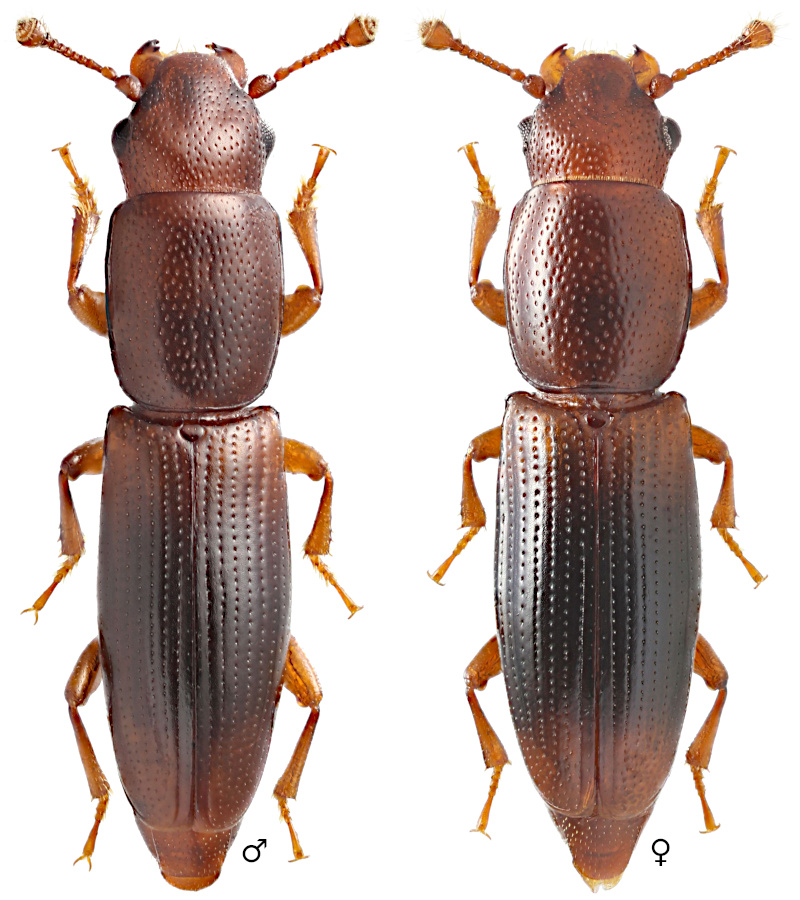
| Tarsal Formula: 5-5-4 (♂), 5-5-5 (♀); less commonly, in both sexes, 5-5-5 or 4-4-4 |
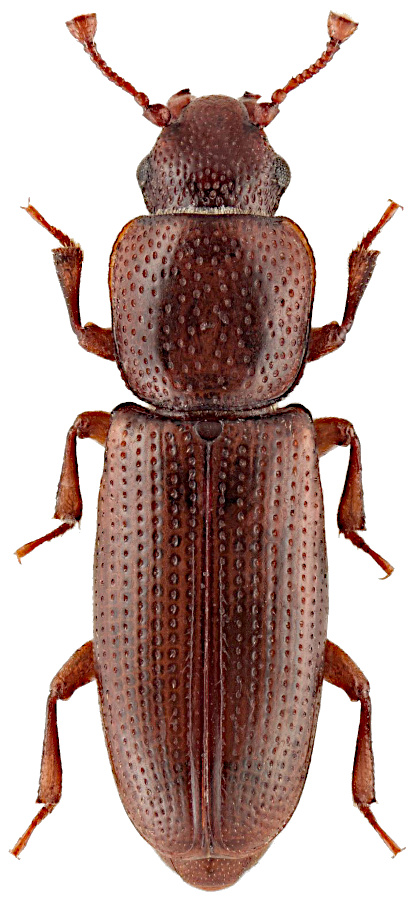
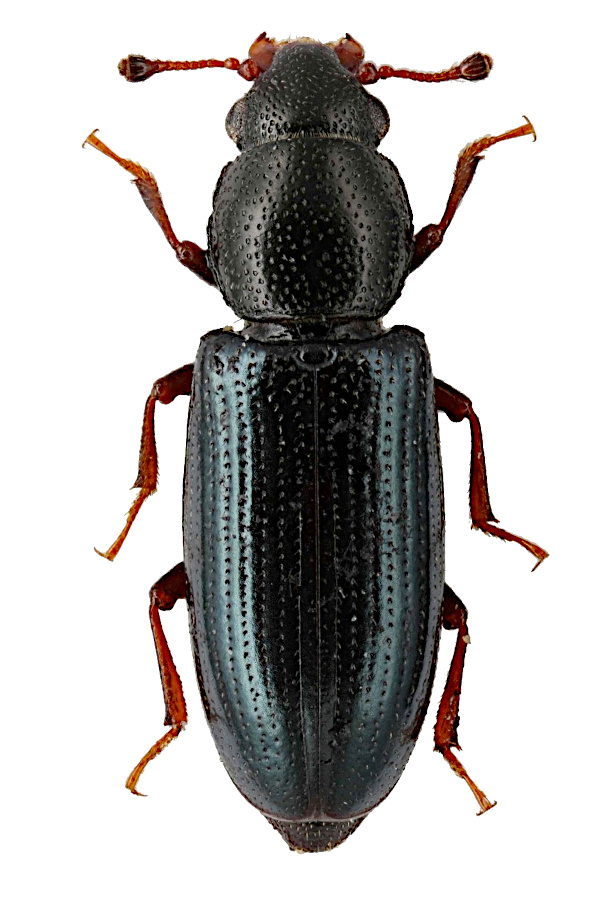
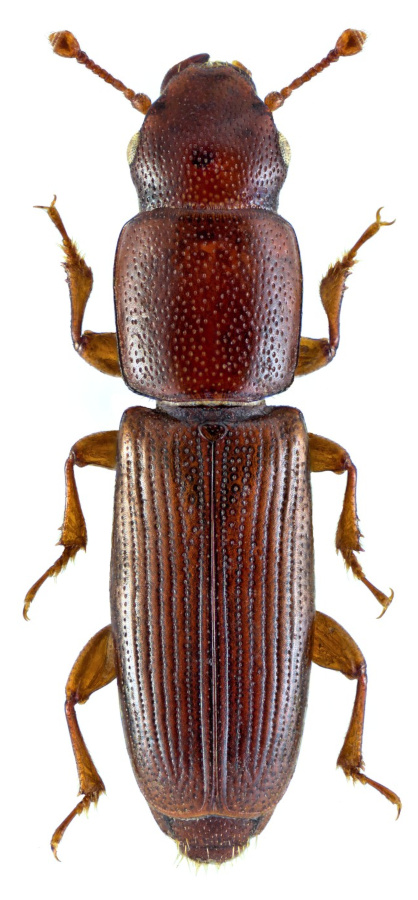
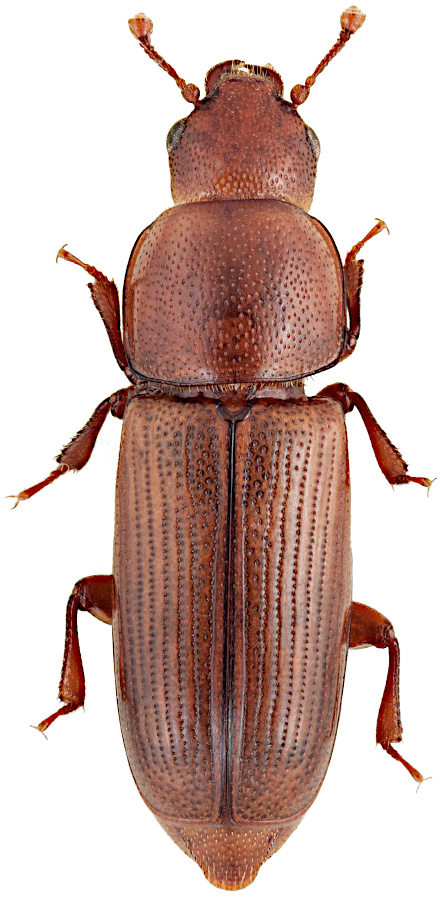
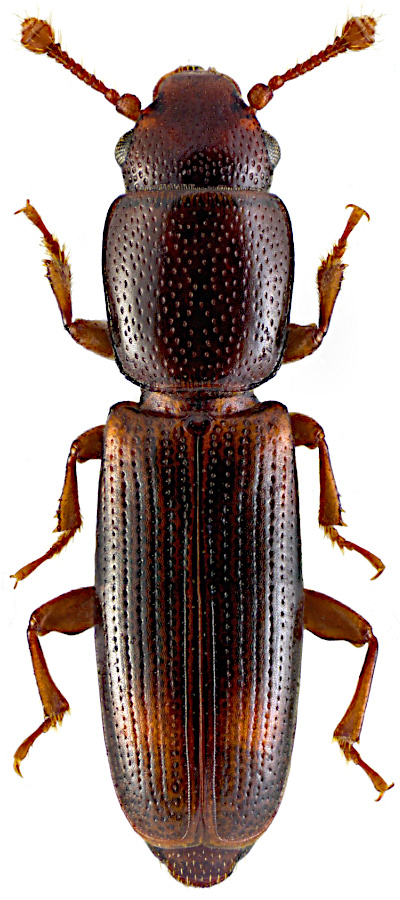
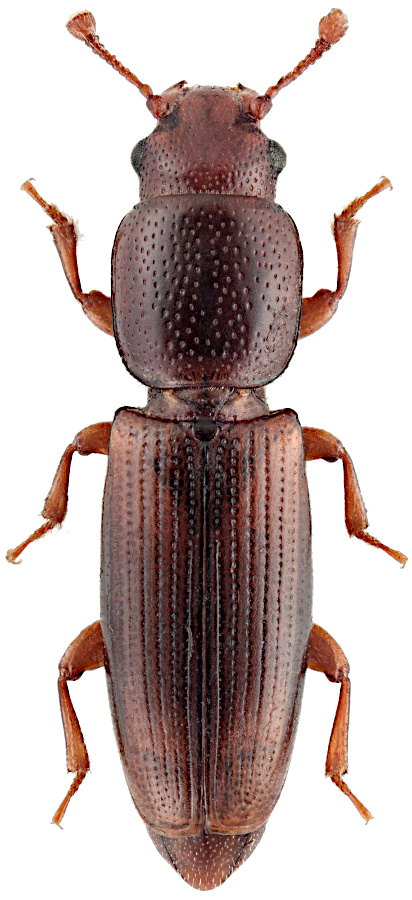
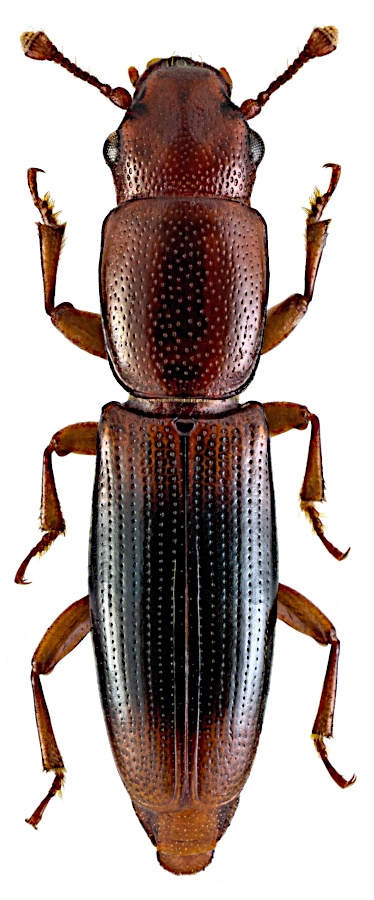
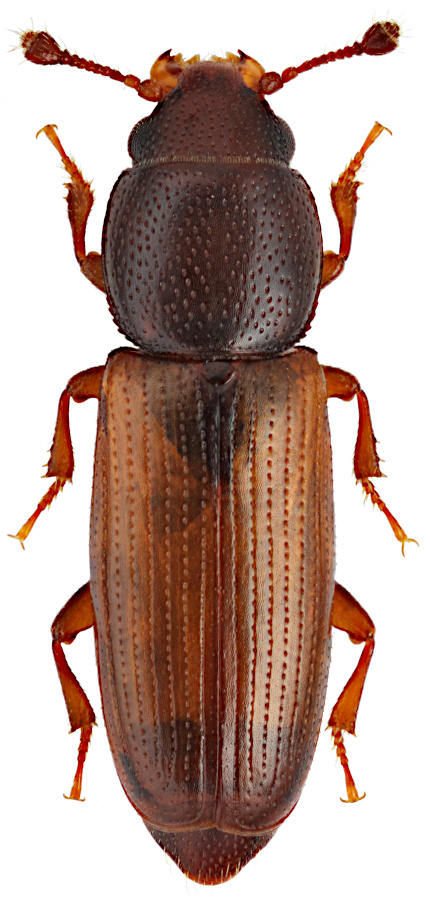
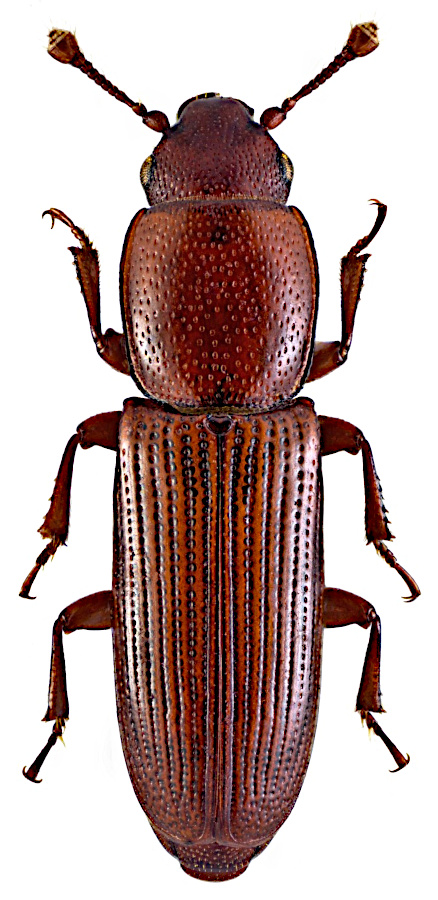
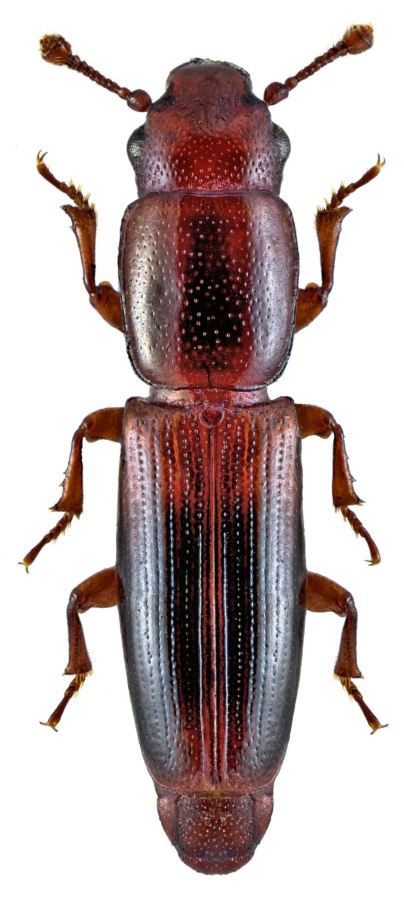
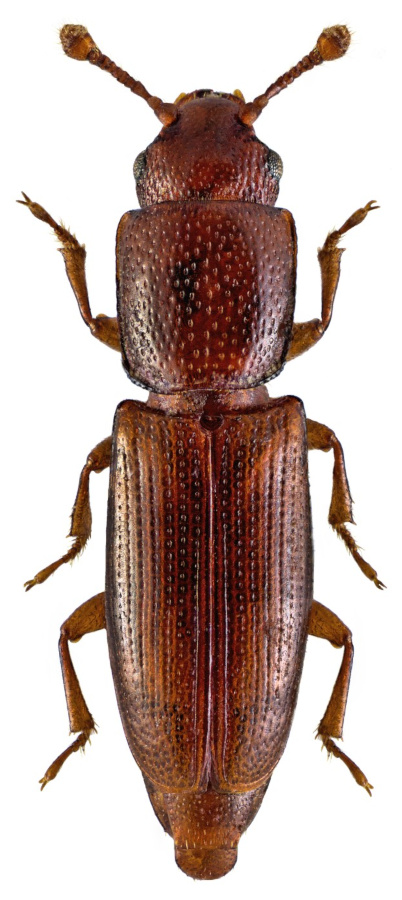
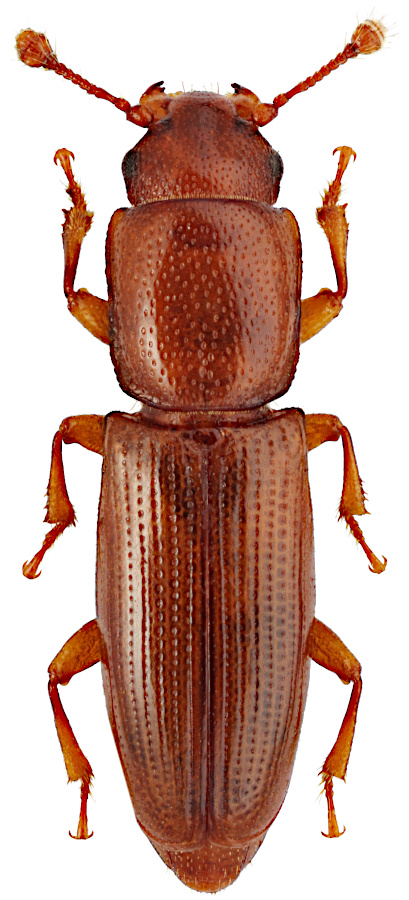
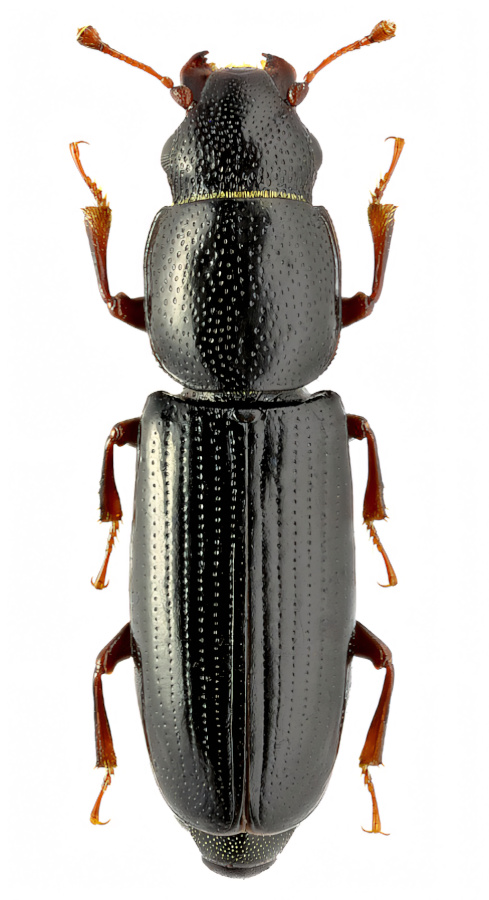
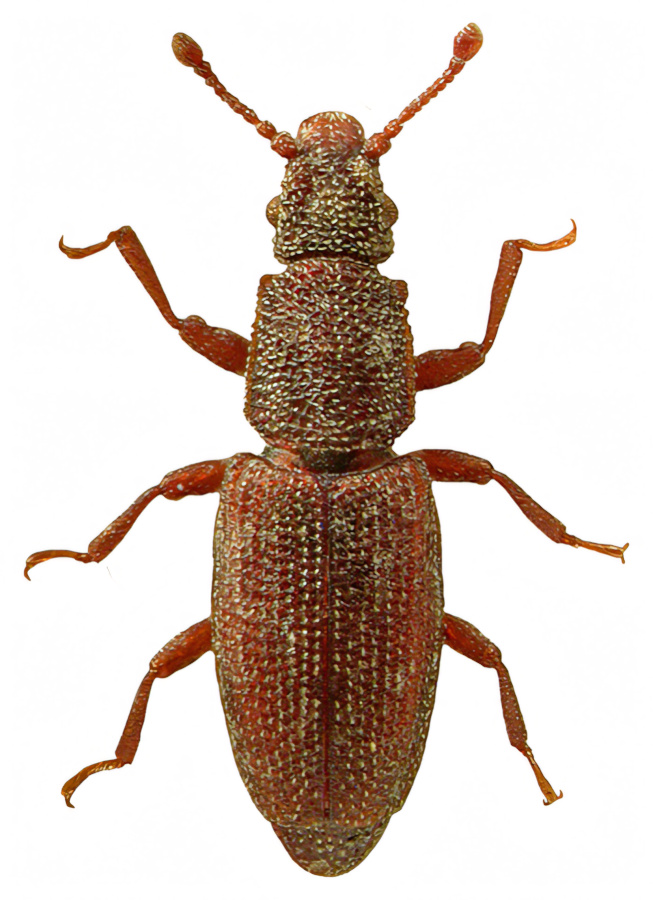
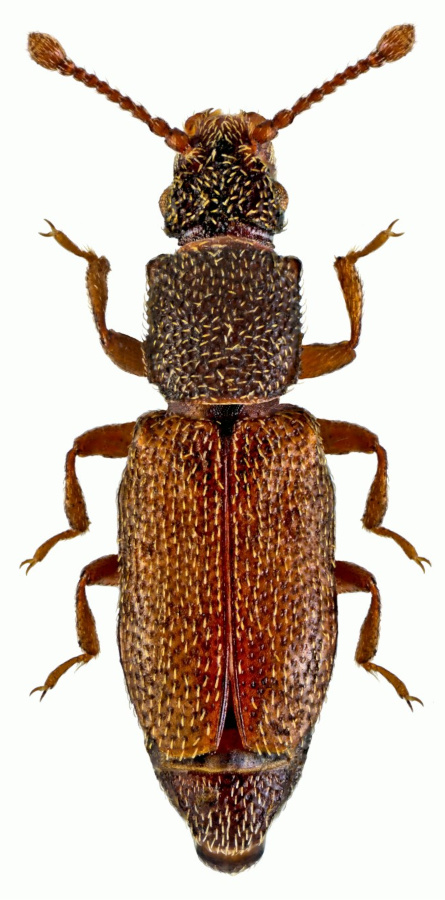
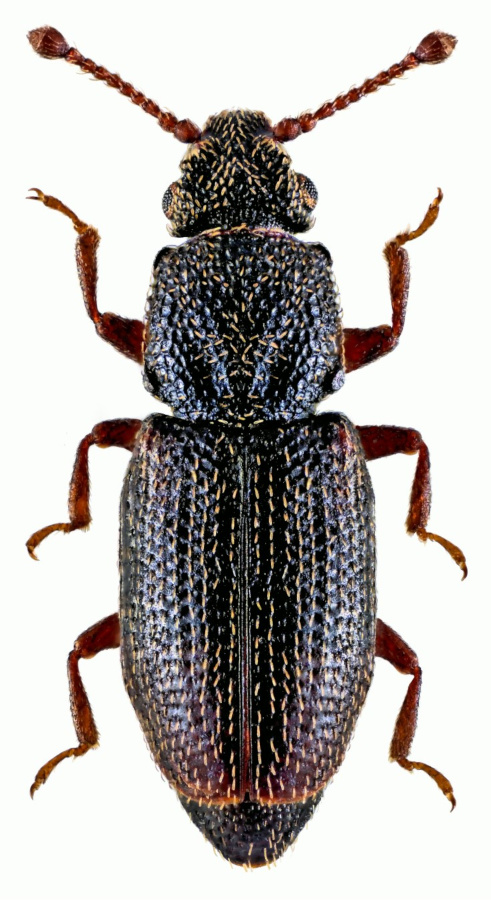
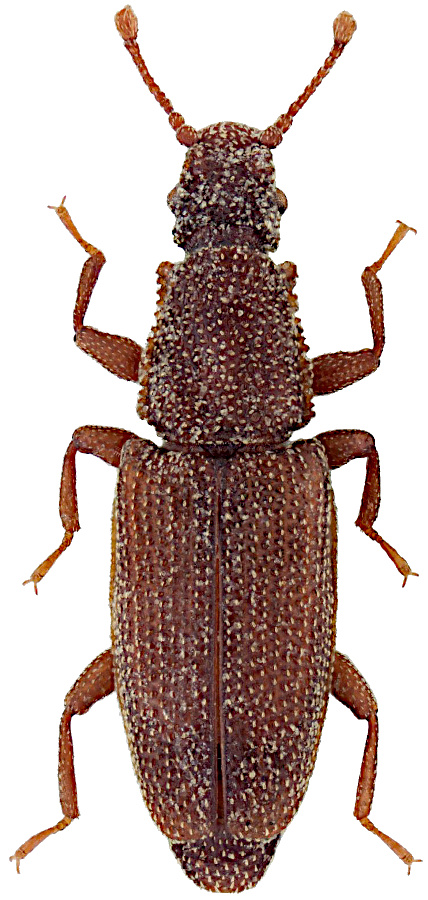
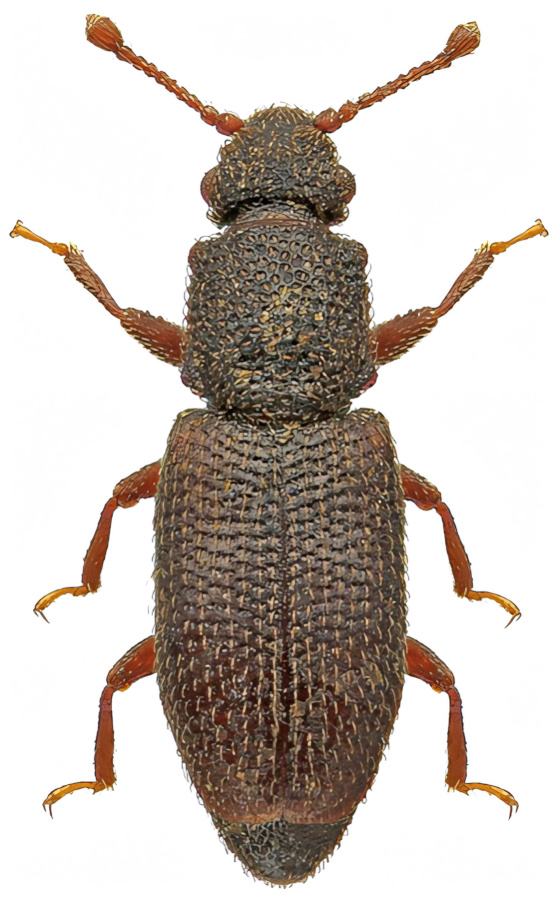
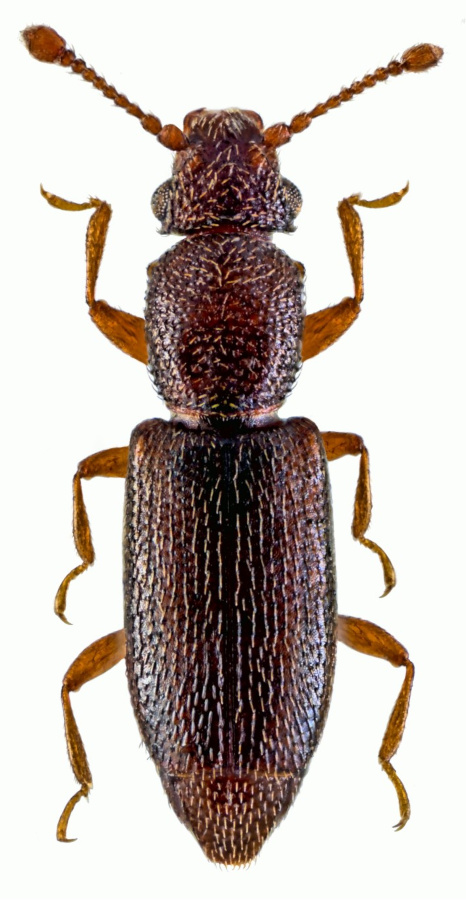
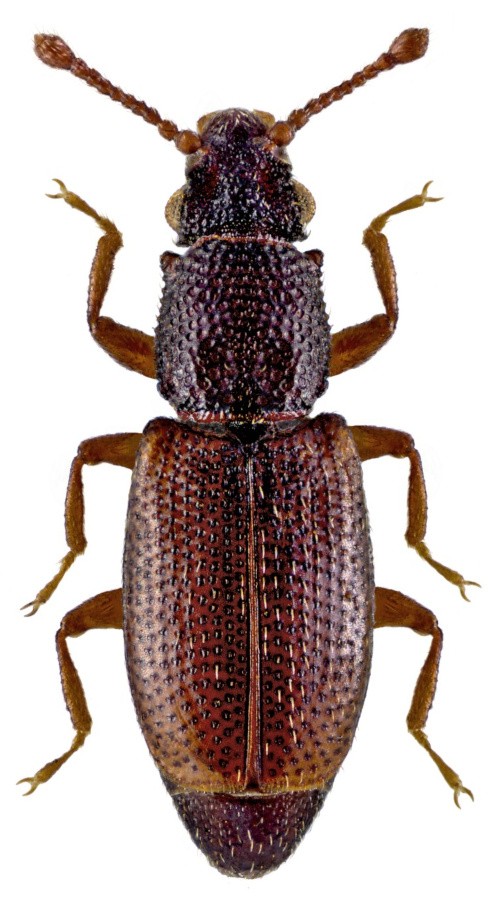
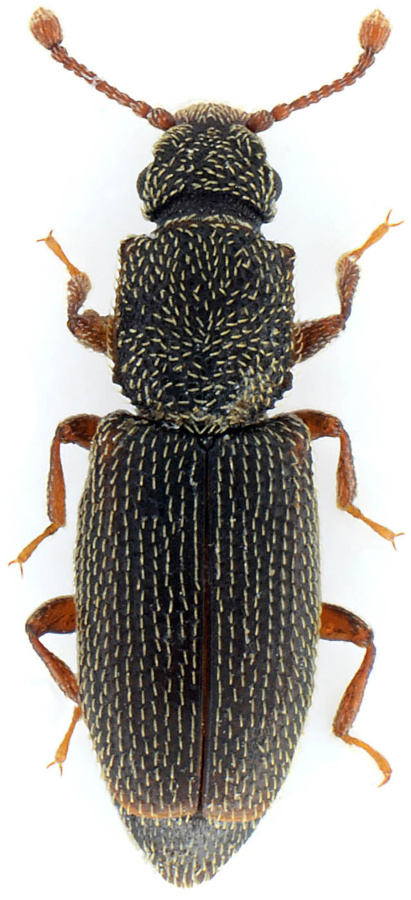
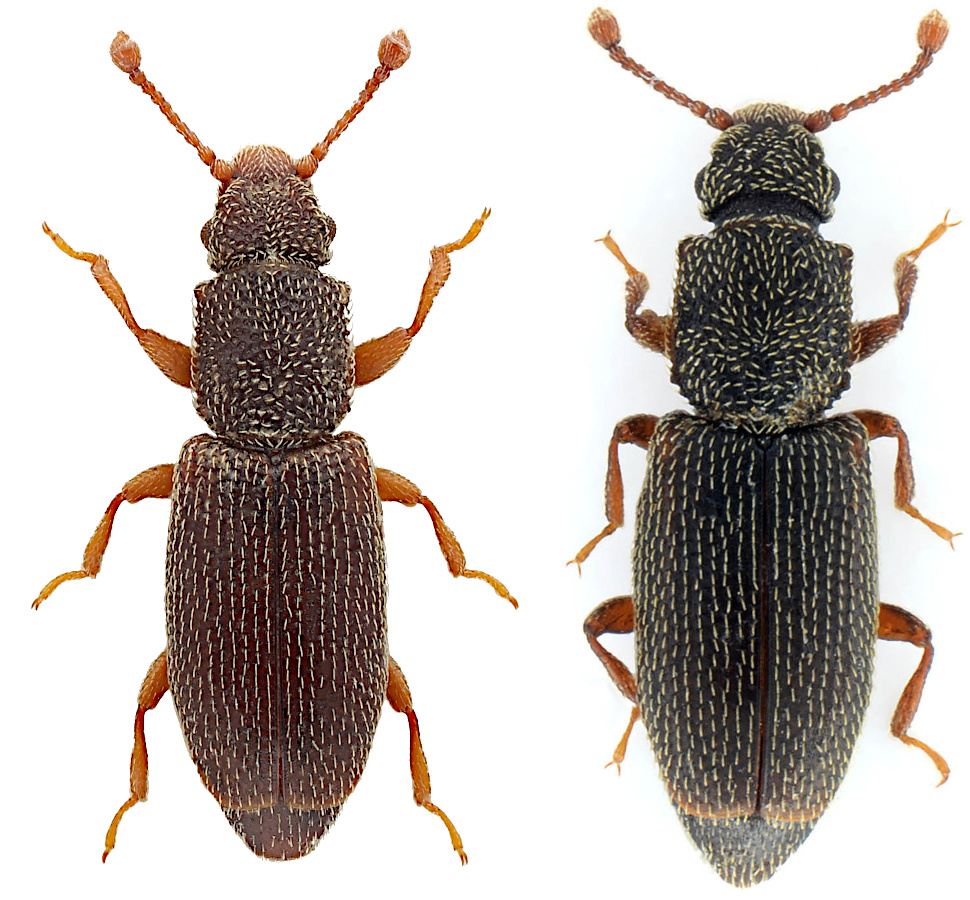
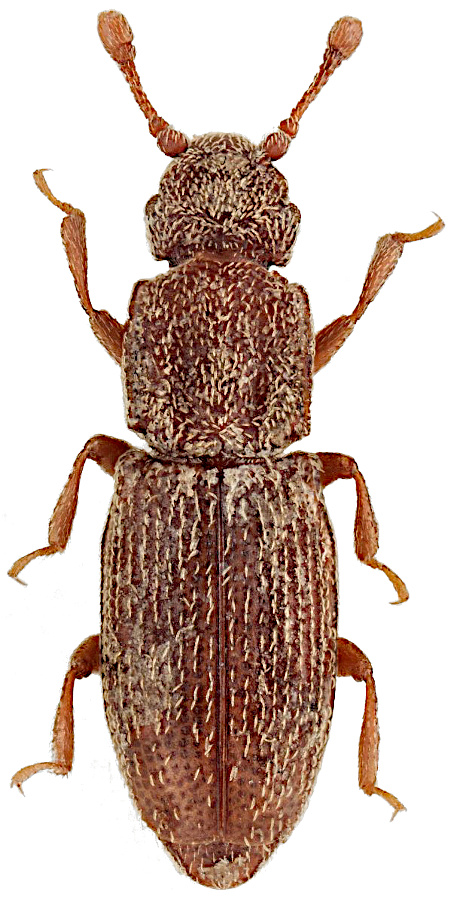
Monotomidae are a small family of beetles within the superfamily Nitiduloidea, found practically all over the world. Adults usually measure approximately 1–6 mm (in the Czech Republic, 1.4–4.3 mm) and have an elongated, cylindrical to flattened body with a head that is clearly visible when viewed from above. Typical features include short antennae, ending in a one- or two-segmented club, conspicuously truncated elytra revealing 1–2 abdominal segments, and a distinctive structure of the abdominal sternites (the 1st and 5th being elongated). Their colouration is usually inconspicuous, most commonly yellow-brown, rusty, reddish-brown to blackish-brown; however, some species have a metallic sheen or contrasting markings. Most species live hidden away in decaying organic matter, under the bark of dying or dead trees, in bark beetle galleries, in compost, in plant detritus or in the nests of ants and birds. Their feeding habits are varied, with mycophagous and predatory species predominating. Some species consume decaying organic matter, yeasts or fungal fruiting bodies growing in decaying wood, whilst others are predatory and hunt mainly bark beetles and their life stages. Several species are myrmecophilous and live in anthills. In forest ecosystems, they can thus contribute both to the decomposition of organic matter and to the regulation of wood-destroying insect populations.
Number of Species:
| World | 205 | |
| Palaearctic Region | 85 |
| Europe | 39 | |
| Central Europe | 26 |
 |
Family Card |
MONOTOMIDAE (Laporte, 1840) |
Monotominae (Laporte, 1840) |
Monotomini (Laporte, 1840) |


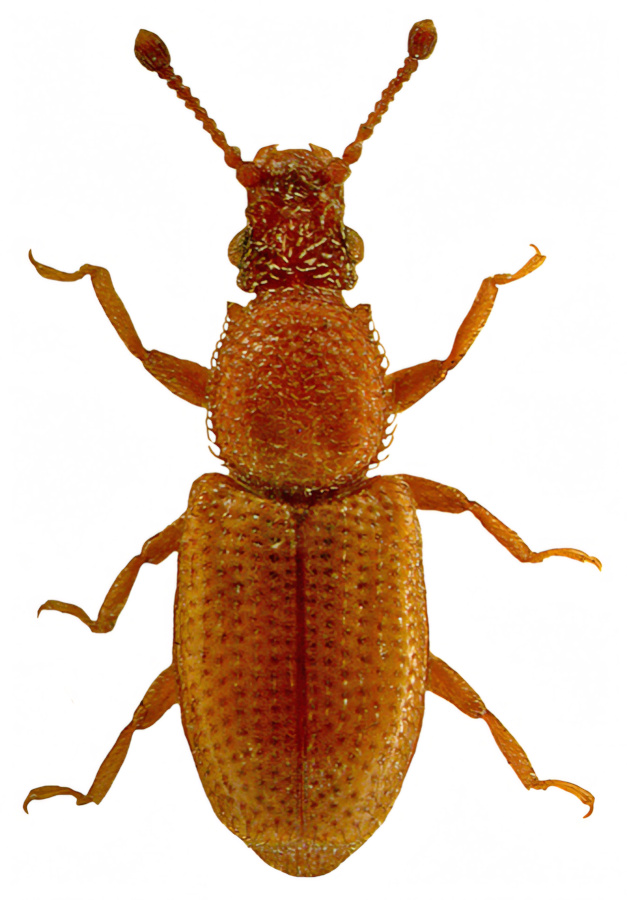
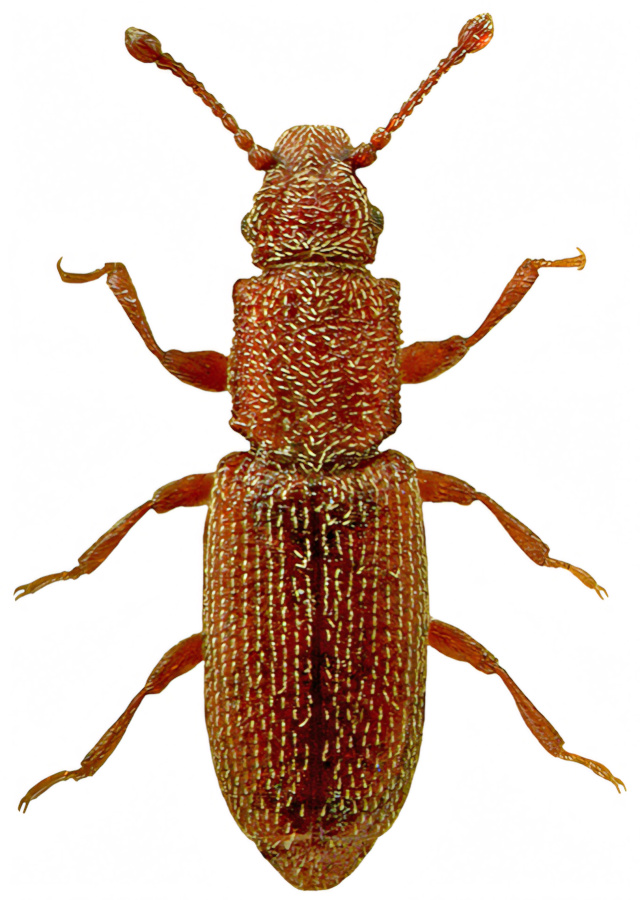
Rhizophaginae (Redtenbacher, 1845) |