Dolichus halensis (Schaller, 1783)
 Family: Carabidae
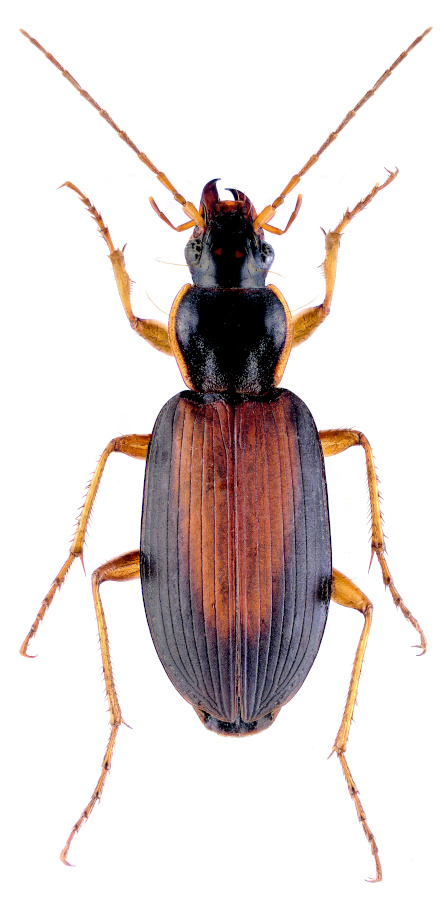
Size 11.8 - 19.1 mm. Pitch black species. The lateral margin of the protonum and appendages are red-yellow. At the base of the elytra there is a large triangular red-yellow spot, extending from the scutellum to the middle of the elytra.
Adults are found from June to September. It is a macropterous species. It occurs in dry to semi-arid unshaded habitats. It is common in fields. It inhabits lowlands to hills.
Larvae and adults are polyphagous, feeding on small insects, but also seeds.
Picture source: main: Schmidt, 2019