
Coleoptera > Myxophaga > (Sphaeriusoidea) > Sphaeriusidae
- LAT: Microsporidae (Crotch, 1874)
The following synonymy was formerly used for the family, which is now considered invalid, but can be encountered in some older works. - LAT: Sphaeridae (Erichson, 1845)
This form is considered to be homonymous (identical name) with the mollusk family (Sphaeriidae) and therefore the name was changed to Sphaeriusidae to avoid confusion.
- CZ: Drobněnkovití, Kulovníčkovití (not used)
- SK: Kúľavkovité
- PL: Gałeczkowate
- DE/AT/CH: Kugelkäfer, Zwergwasserkäfer
- HU: Atkabogárfélék
- EN: Minute Bog Beetles, Minute shore beetles, Spaerius Beetles
- RU: Sferiidy, spheriids
The name of the family Sphaeriusidae is based on the generic name Sphaerius, which is derived from the Greek word σφαῖρα (sphaīra), meaning "sphere" or "sphere".
- Origin of the name: The name was chosen from the shape of the adult's body, which is typically strongly arched, broadly oval, and very much like a small sphere when viewed from above and from the side.
Historically, the name Sphaeriidae also appeared, but it conflicted with the name of the bivalve family (Bivalvia) and was therefore modified (conserved) as Sphaeriusidae (BZN decision / Opinion 1957).
History
The family was first described in the 19th century, the genus Sphaerius was established by Waltl (1838) and the family was attributed to the German entomologist Wilhelm Ferdinand Erichson in 1845. However, a nomenclatural complication arose in the course of history. The original form of the name Sphaeriidae clashed with the bivalve family (Bivalvia), so a modification and stabilization of the name as Sphaeriusidae was introduced according to Opinion (Bulletin of Zoological Nomenclature). Earlier literature had also suggested the replacement of the genus with Microsporus and the associated use of Microsporidae, but this was later reconsidered and the name Sphaerius/Sphaeriusidae was restored. In the past, representatives of this family were often placed as a subfamily (Sphaeriinae) within the family Hydrophilidae (watermillids) or Acolitidae (now obsolete). From about the middle of the 20th century onwards, mainly due to the work of P. Roy Crowson, the distinct morphology and phylogenetic position was recognised and the Sphaeriusidae were raised to the level of a separate family. In the current classification, the family Sphaeriusidae is the only family in the superfamily Sphaerioidea, and is the key representative of the suborder Myxophaga, which includes only four small and specialized families of aquatic or wetland beetles.
Morphology
Representatives of the family Sphaeriusidae are among the smallest beetles in the world, classified as Microcoleoptera. Species of the family are extremely small, with adult size ranging between 0.5 mm and 1.5 mm. Larvae tend to be slightly longer and can reach lengths of over 1.5 mm.
The beetles are usually monochromatic, most often in shades of dark brown to black, sometimes with a slight bronze sheen. The body is very characteristic - broadly oval, strongly arched (almost spherical), shiny with a distinctly short head that is largely hidden under the shield. The head is prognathous, short, broad and compact. The compound eyes are well developed and only very slightly protruding. Antennae are relatively long, extending beyond the posterior margin of the prosternum, 11-segmented, with a 3-segmented malleus. The carpels are smooth or finely punctate and cover the entire hind segments. Legs short, tarsi typically 3-segmented (sometimes 2-segmented), tibiae of forelegs often expanded - adaptation to muddy/littoral habitats. Abdomen with three visible sternites. Aedeagus reduced, mostly membranous.
Bionomy
These are aquatic or rather humid (semi-aquatic) beetles. They are found at the edges of stagnant and slow-flowing waters, in moist substrate, leaf litter, in mud or moss near banks or under stones. They prefer sites with abundant vegetation such as damp mosses, marshy ground, mud or wetlands around water. Some species may also live in wet soils further from water (observed especially in tropical and forest species).
The beetles are partly aquatic. They commonly move in the water column or on the surface, but are not fully adapted to life underwater as, for example, divers (Dytiscidae). Beetles and their larvae breathe atmospheric oxygen. Adults maintain a layer of air, called a plastron, under their bushes that allows them to remain underwater for longer periods of time. The larvae of some species have special growths (tracheal gills) to breathe underwater.
They are thought to feed mainly on algae and cyanobacteria (cyanobacteria) found on submerged objects, mud or in wet sediments. They may also consume microscopic organic debris (detritus). They are therefore primarily algo-detritophagous. They are closely associated with moist microhabitats where they depend on algae and biofilm.
Indicative numbers of representatives of selected taxonomic units in individual regions
| Taxonomic Unit |
Region | |||||||||
| Czech republic |
Central Europe |
Europe | Afrotropical | Australian | Nearctic | Neotropical | Oriental | Palaearctic | World | |
| Subfamily | 0 | 0 | 0 | 0 | 0 | 0 | 0 | 0 | 0 | 0 |
| Tribe | 0 | 0 | 0 | 0 | 0 | 0 | 0 | 0 | 0 | 0 |
| Genus | 1 | 1 | 1 | 1 | 1 | 1 | 1 | 2 | 1 | 2 |
| Species | 1 | 1 | 3 | 2 | 2 | 3 | 2 | 10 | 8 | 23 |
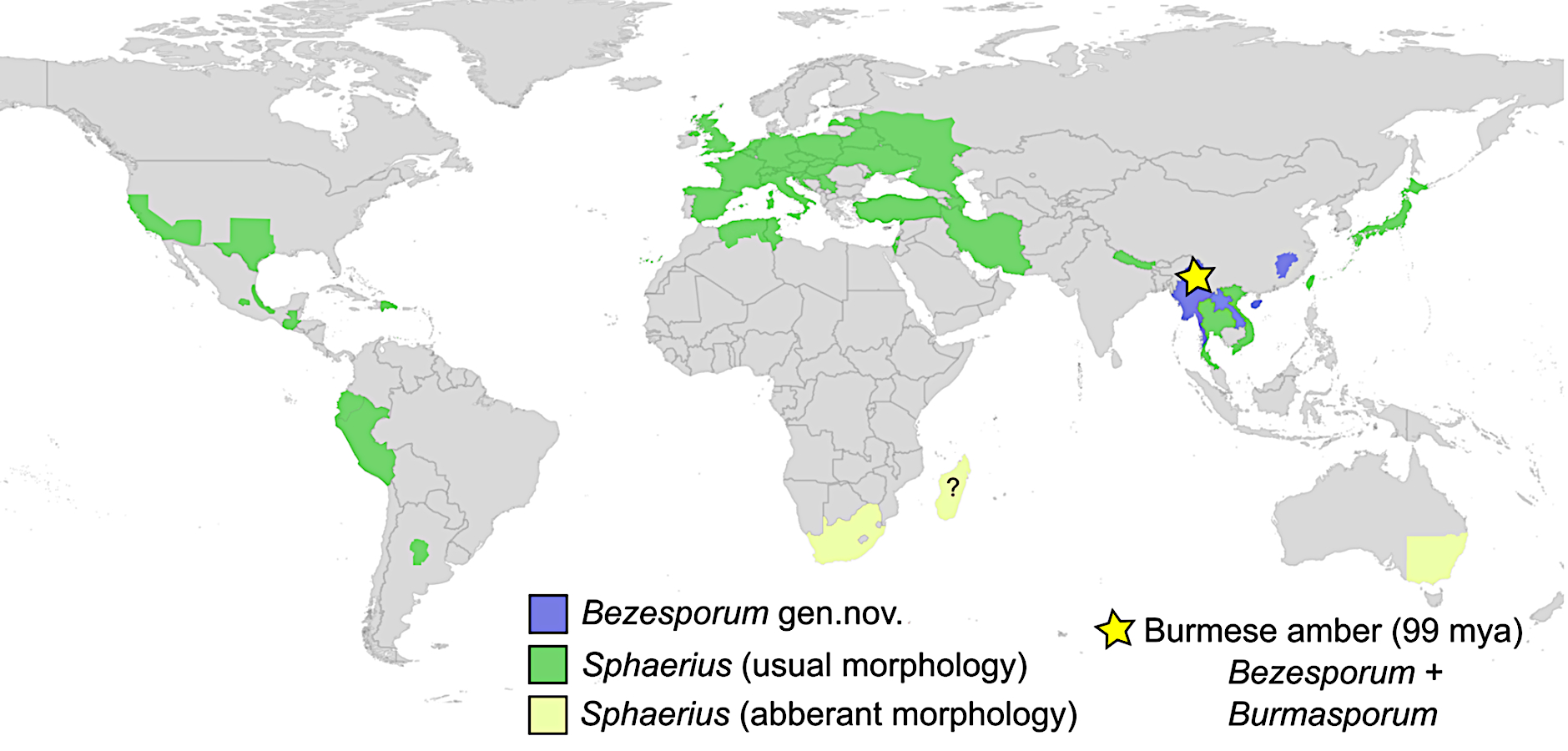
Distribution of records of the genera Sphaerius and Bezesporum
Largest and smallest
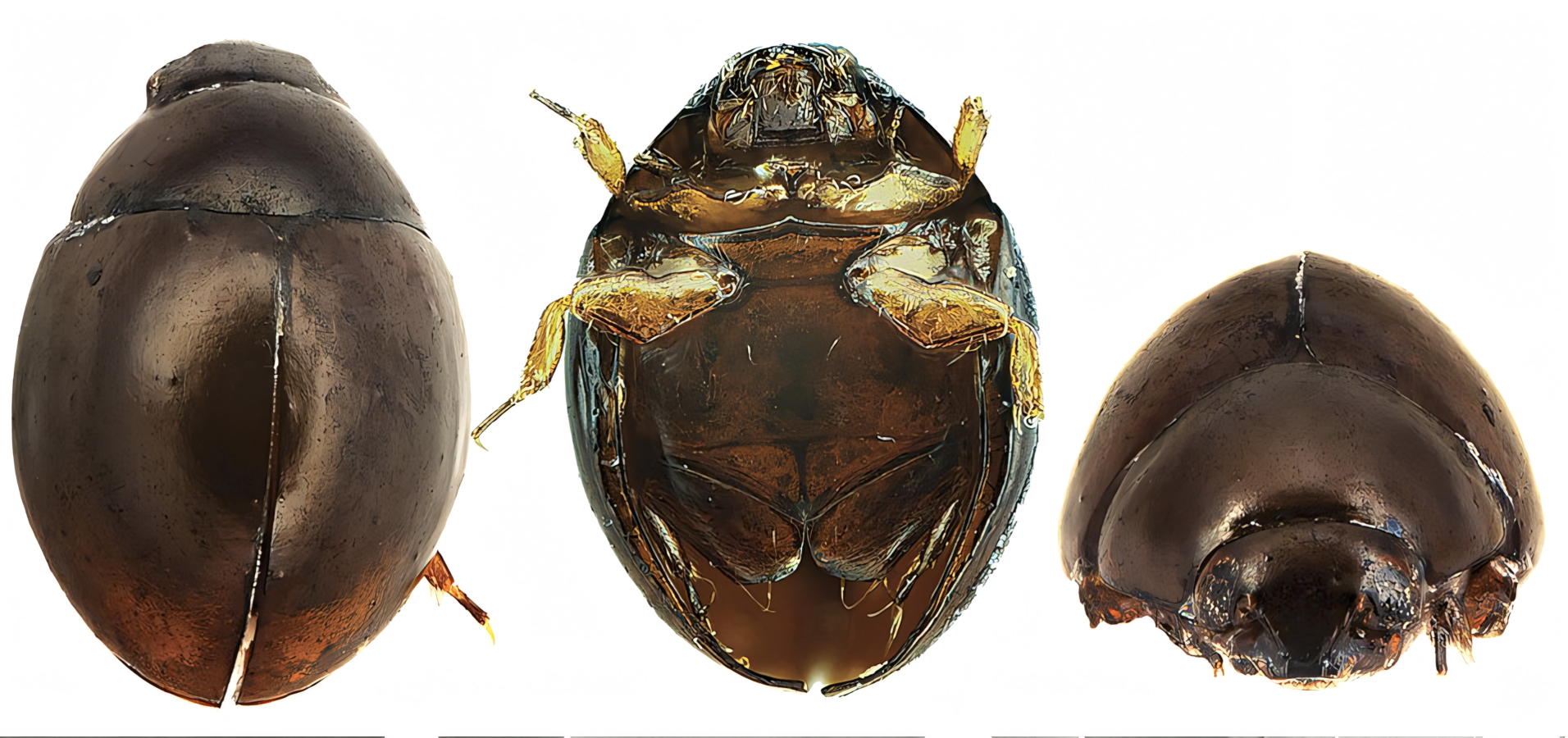
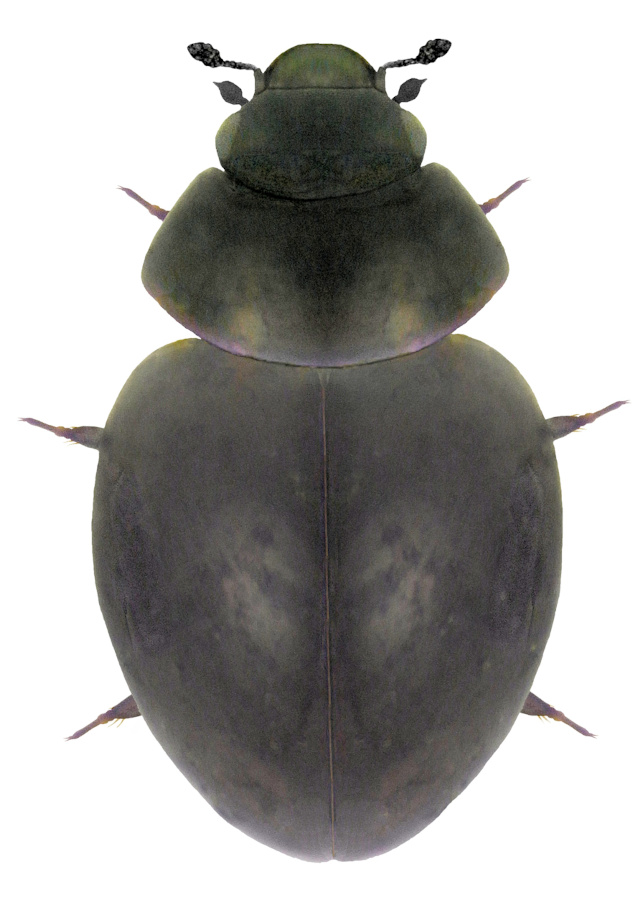
The family Sphaeriusidae is small, comprising only two genera worldwide - Sphaerius (Waltl, 1838) and Bezesporum (Fikacek, Yamamoto, Matsumoto, Beutel et Maddison, 2022). The size of species in the family ranges from 0.5 to 1.5 mm, and the size of the smallest and largest species corresponds to this. Examples of larger species include Sphaerius coenonymus, which measures over 1 mm. Similarly, the smallest species are close to 0.5 mm in size. The typical size of our only representative of the family, Sphaerius acaroides, is around 0.6 - 0.8 mm.
The rarest
Rarity is often due to endemism and specific habitat requirements. For example, species from remote islands or caves are often considered rare because their small populations are vulnerable. Similarly, some tropical species are known from only a few localities and may be considered rare. Due to the difficulty of determination and collection, many species are considered rare simply because they have not yet been sufficiently studied.
Attractions
- Phylogenetic significance: the family Sphaeriusidae is considered one of the basal (evolutionarily original) groups of beetles (Coleoptera). Its study is crucial for understanding the evolution of the entire order, as the suborder Myxophaga stands at the transition between ancient and modern beetle groups.
- Air bubble (Plastron): like many other aquatic beetles, Sphaerius acaroides uses a plastron to breathe underwater. This is a thin layer of air that is trapped between the hairs on the body and trunk. This bubble acts as a "physical gill" that constantly takes in oxygen from the surrounding water.
- Miniaturization and adaptation: the Sphaeriusidae exemplify extreme miniaturization in beetles with a number of morphological adaptations (fusion of some leg parts, reduction in the number of visible ventrites of the abdomen, shortened legs), making them an interesting subject for the study of evolutionary miniaturization.
- Global distribution: despite the small number of species, the genus Sphaerius is cosmopolitan.
- Fossil record: More recent studies describe a mid-Cretaceous fossil of this lineage (the Boer amber), suggesting an ancient origin and the nature of the current representatives as "living fossils". This increases evolutionary and paleontological interest in the group.
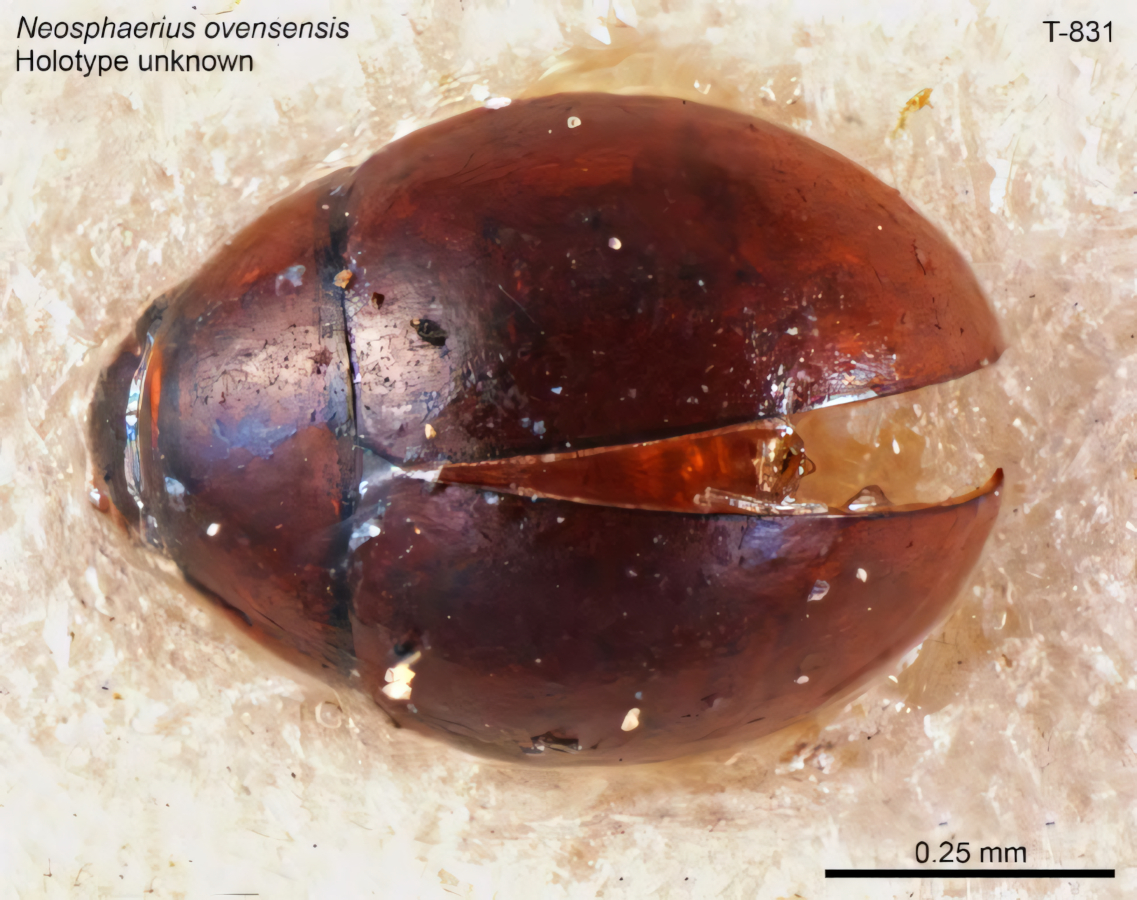
Examples of global representatives of the family

Examples of Czech representatives of the family

- Beutel R., Leschen R.: Handbook of Zoology, Arthropoda: Insecta, Coleoptera: Beetles, Ed. 2, Volume 1: Morphology and Systematics (Archostemata, Adephaga, Myxophaga, Polyphaga partim), Walter de Gruyter GmbH, Berlin/Boston, 2016
- Bouchard P.: The Book of Beetles, A Lifesize Guide to Six Hundred of Nature’s GEMS, Ivy Press, East Sussex, 2014
- Boukal D., Boukal M., Fikáček M., Hájek J., Klečka J., Skalický S., Šťastný J., Trávníček D.: Katalog vodních brouků České republiky / Catalogue of water beetles of the Czech Republic, Klapalekiana, 43 (Suppl.): 1-289, 2007, Česká společnost entomologická, 2007
- Boukal D., Fikáček M., Hájek J., Konvička O., Křivan V., Sejkora R., Skalický S., Straka M., Sychra J., Trávníček D.: Nové a zajímavé nálezy vodních brouků z území České republiky (Coleoptera: Sphaeriusidae, Dytiscidae, Helophoridae, Hydrophilidae, Georissidae, Hydraenidae, Scirtidae, Elmidae, Dryopidae, Limnichidae, Heteroceridae), Klapalekiana, (2012), 48: 1–21, 2012
- Dlouhý F.: Brouci, Soustavný popis nejdůležitějších českých brouků s návodem, kterak zakládati sbírky broukův. 2. vydání, Nakladatel I. L. Kober, Praha, 1912
- Hájek J.: Folia Heyrovskyana: Coleoptera: Sphaeriusidae, Gyrinidae, Haliplidae, Noteridae, Paelobiidae, Icones insectorum Europae centralis, Series B, 9: 1-13, 31 October 2007, Nakladatelství Kabourek, Zlín, 2007
- Hůrka K.: Brouci České a Slovenské republiky, -, Nakladatelství Kabourek, Zlín, 2017
- Klapálek F.: Atlas brouků středoevropských, část 1, Nakladatel I. L. Kober, Praha, 1903
- Kliment J.: Čeští brouci, Dílo o broucích Čech, Moravy a Slezka, Vydal autor, 1899
