The Family Atlas |
| Processing Status: | ||
| 2 / 2 | 100% | |
| Size of Species: 6 - 18 mm |
| Tarsal Formula: 5-5-5 |
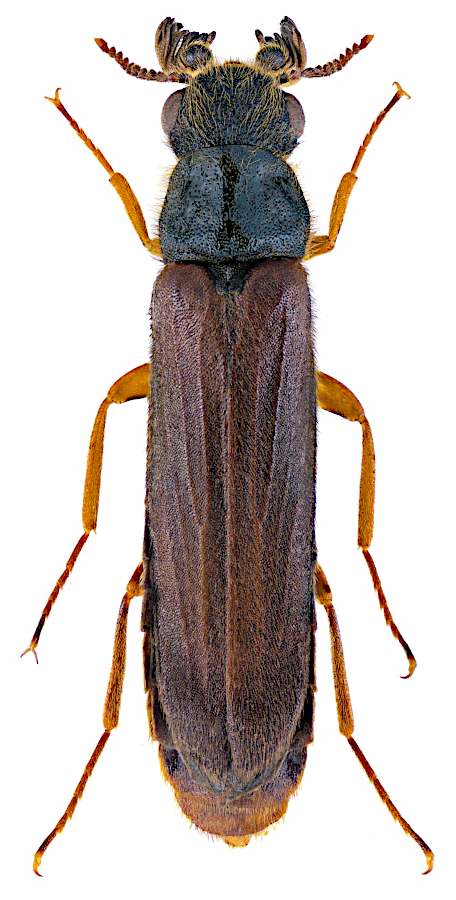
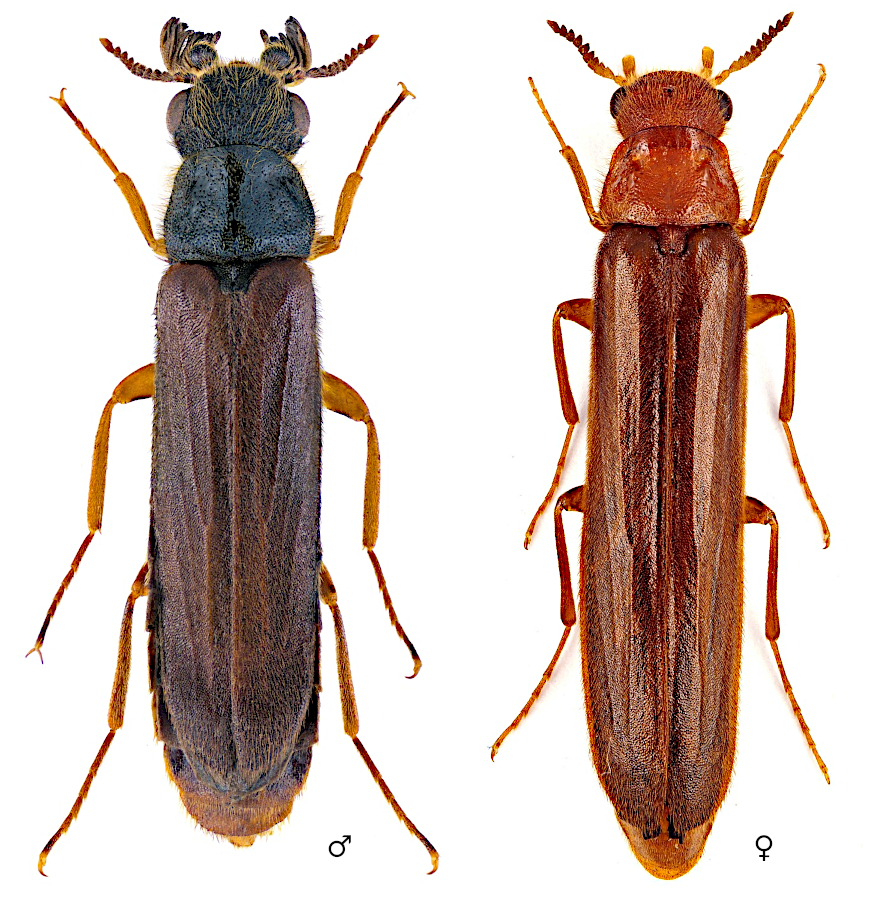
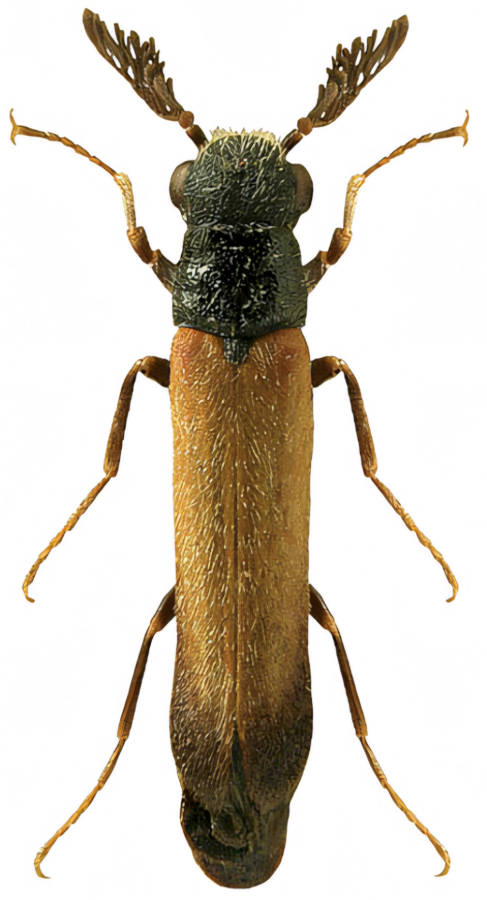
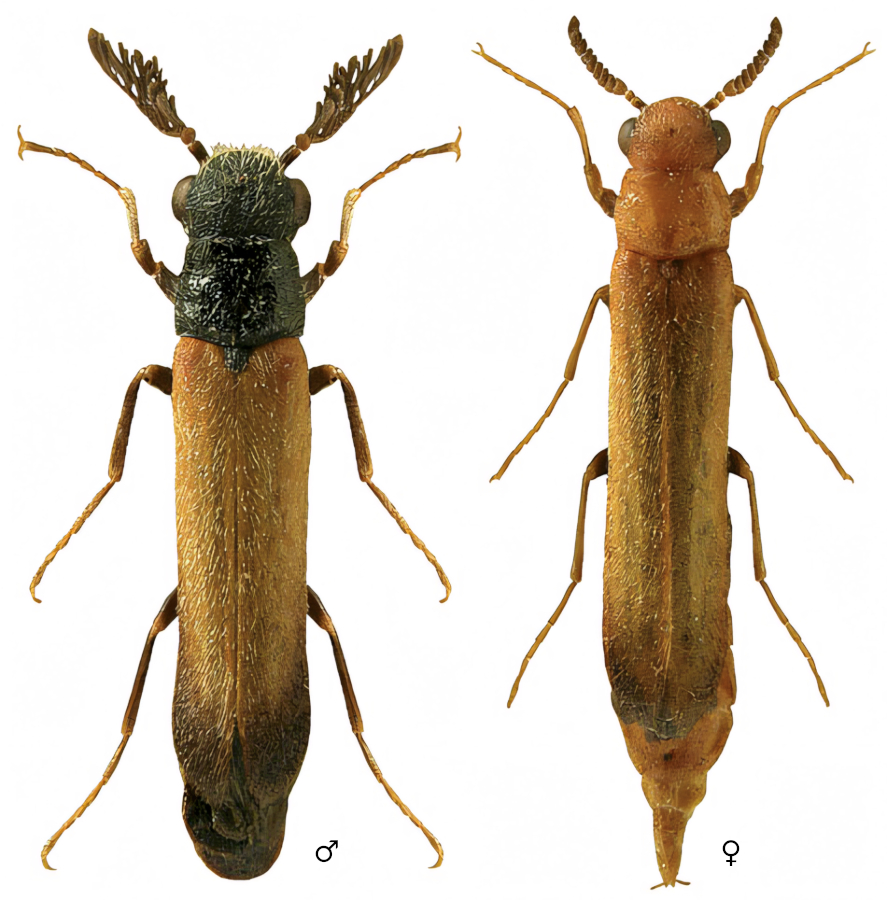
The family Hylecoetidae, newly defined by a phylogenetic study from 2025 (Batelka et al.), comprises the subfamilies Hylecoetinae and Melittommatinae. Compared to the sister family Lymexylidae, these beetles have a slightly more robust body structure, although they still retain an elongated habit. A distinctive feature is strong sexual dimorphism, which is evident not only in the palps but also in colour – males are usually smaller and dark-coloured (almost black), whilst females are larger and yellow-orange. Behind the eyes, their head is conspicuously narrowed into a sort of ‘neck’, which increases its mobility. The antennae are serrated in shape, which is an important distinguishing feature. When laying eggs, females infect the wood with spores of fungi of the genus Endomyces, which they carry in specialised organs (mycetangia). The larvae then consume the mycelium growing on the walls of the tunnels. The Hylecoetidae differ from the sister family Lymexylidae primarily in larval morphology: the 9th abdominal segment of the larvae extends posteriorly beyond the 10th segment and always bears several sclerotised spiny projections of various shapes and arrangements, serving to seal the tunnel against predators. The Melittommatinae include species that resemble bees in appearance. The family is distributed across the Palearctic and Nearctic regions (Hylecoetinae) as well as in the tropics and the Southern Hemisphere (Melittommatinae). The beetles attack both coniferous (e.g. spruce, fir) and deciduous (e.g. birch) wood. In total, the family comprises approximately 27 extant species in 6 genera.
Number of Species:
| World | 27 | |
| Palaearctic Region | 3 |
| Europe | 2 | |
| Central Europe | 2 |
 |
Family Card |
HYLECOETIDAE (Germar, 1818) |
Hylecoetinae (Germar, 1818) |