The Family Atlas |
| Processing Status: | ||
| 7 / 7 | 100% | |
| Size of Species: 5 - 13 mm |
| Tarsal Formula: 5-5-5 |
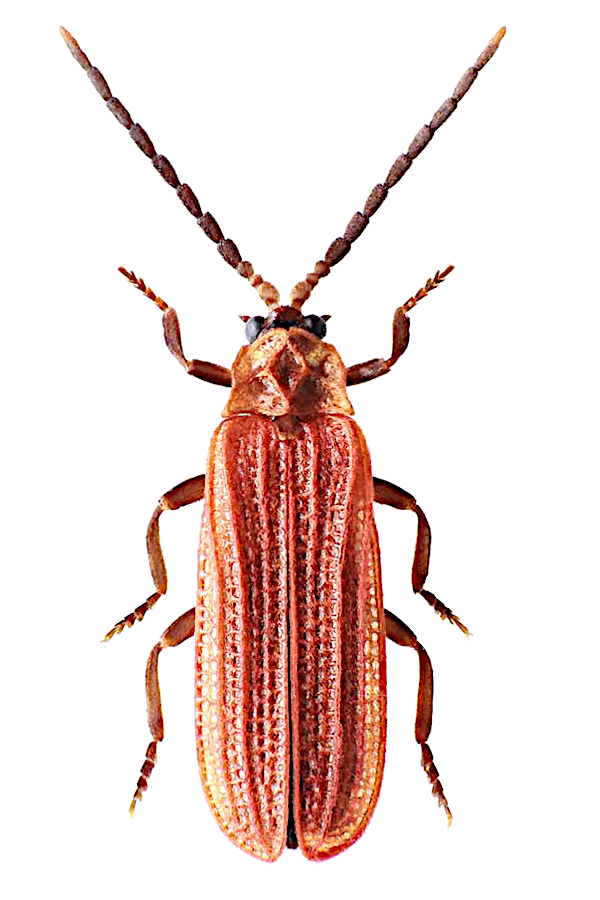
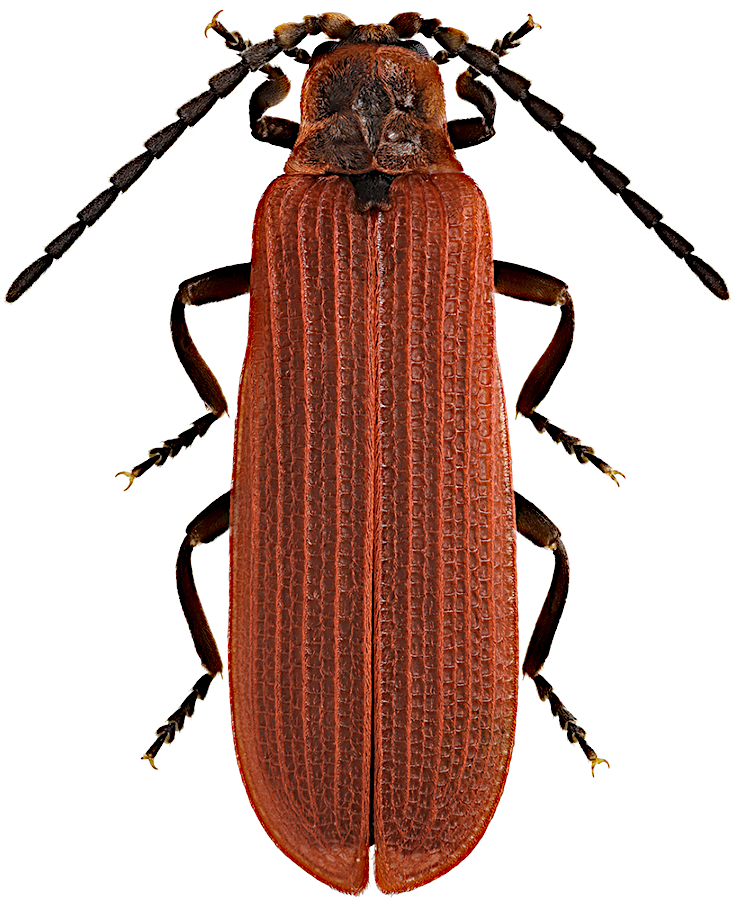
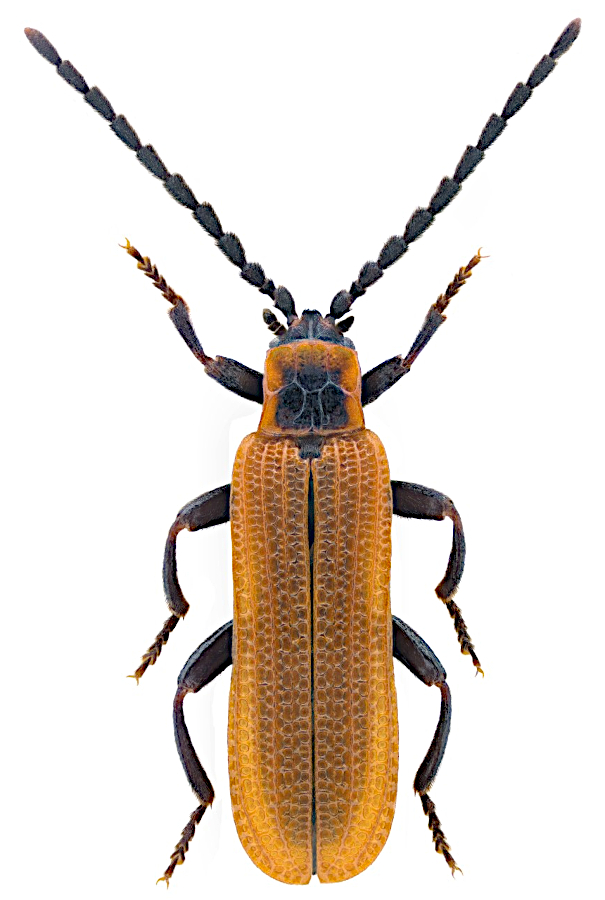
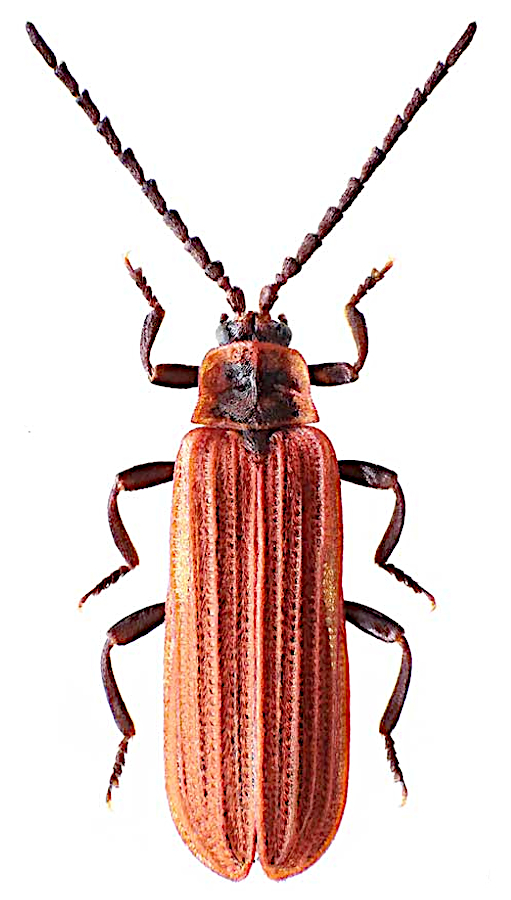
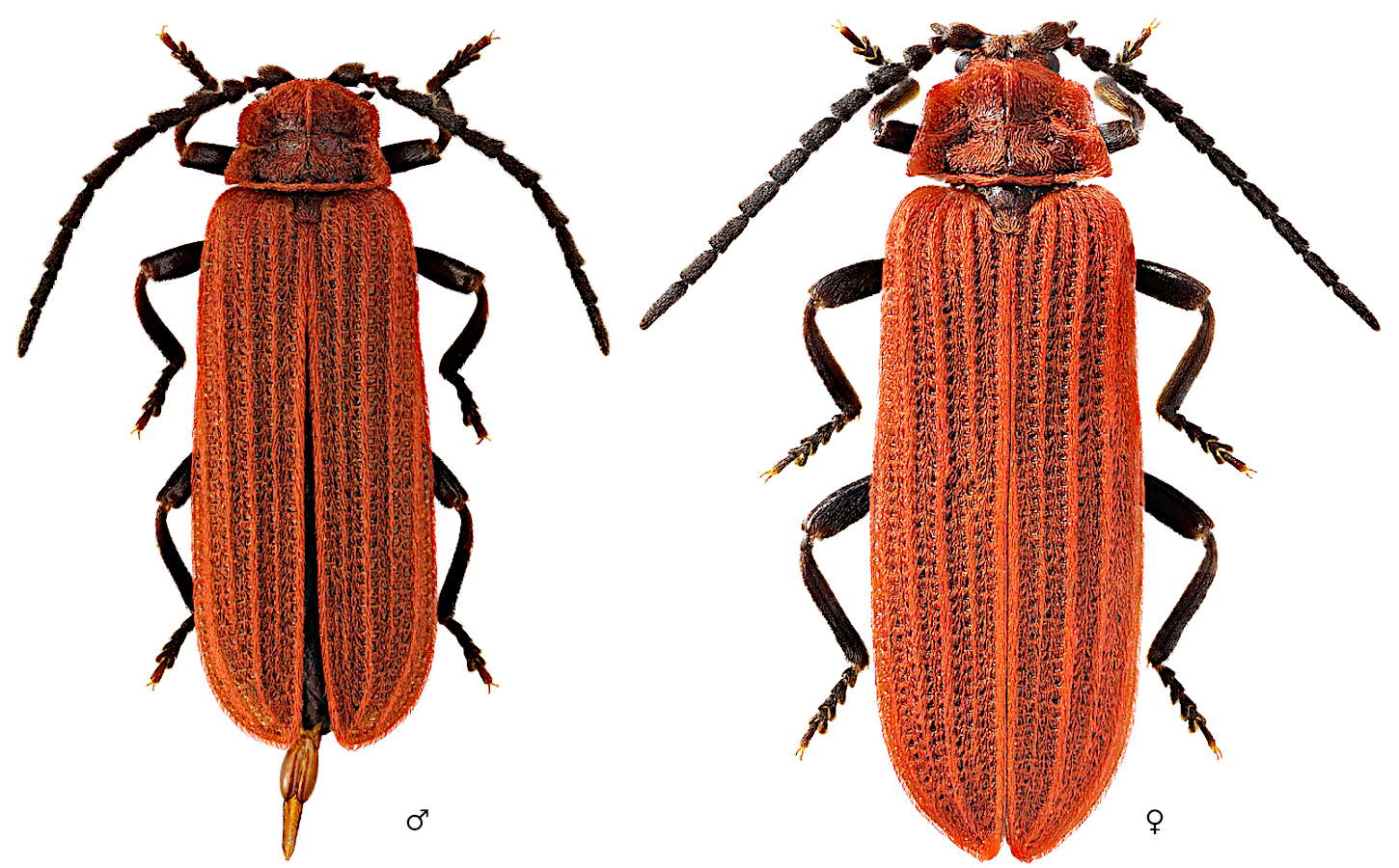
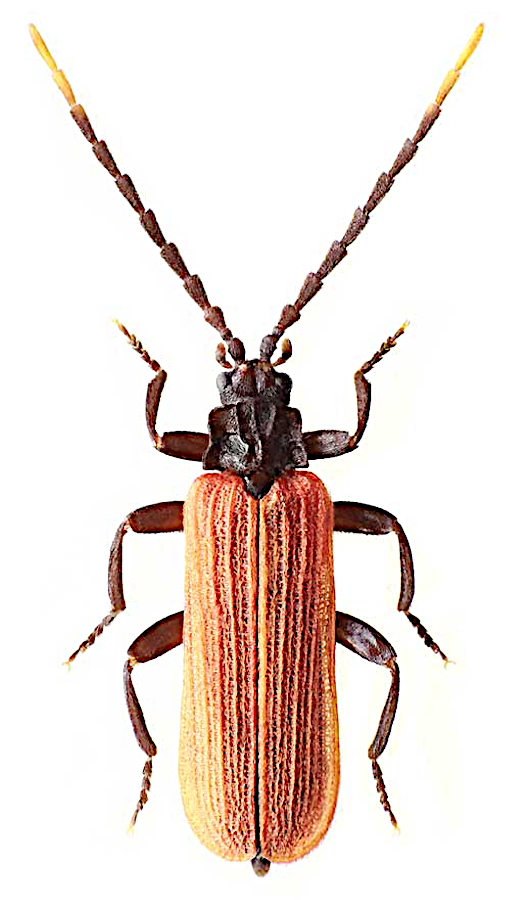
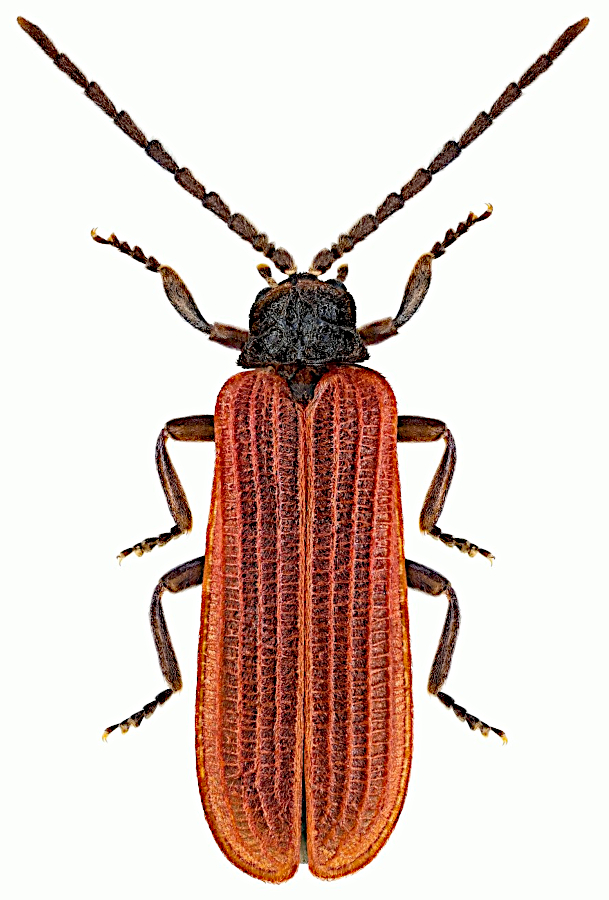
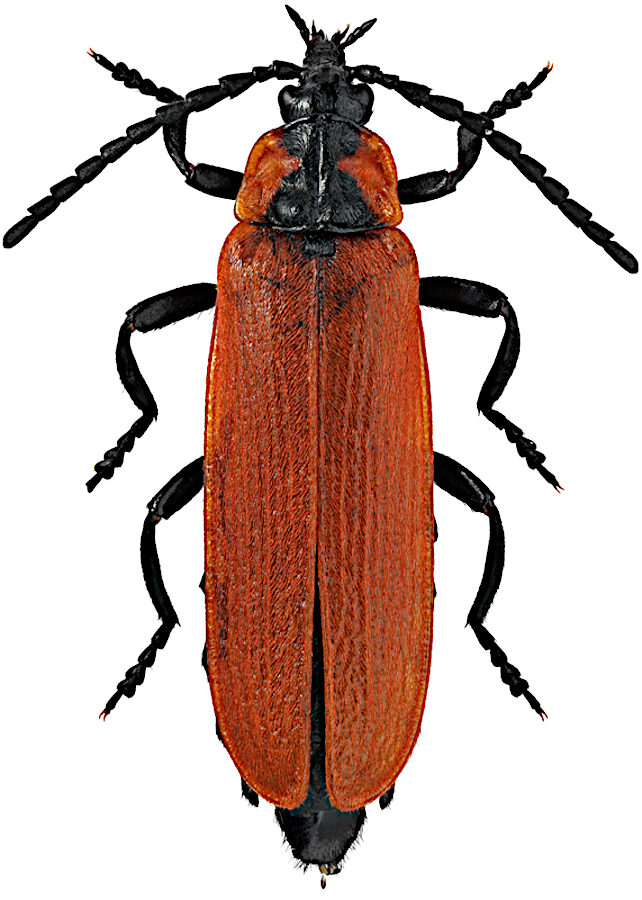
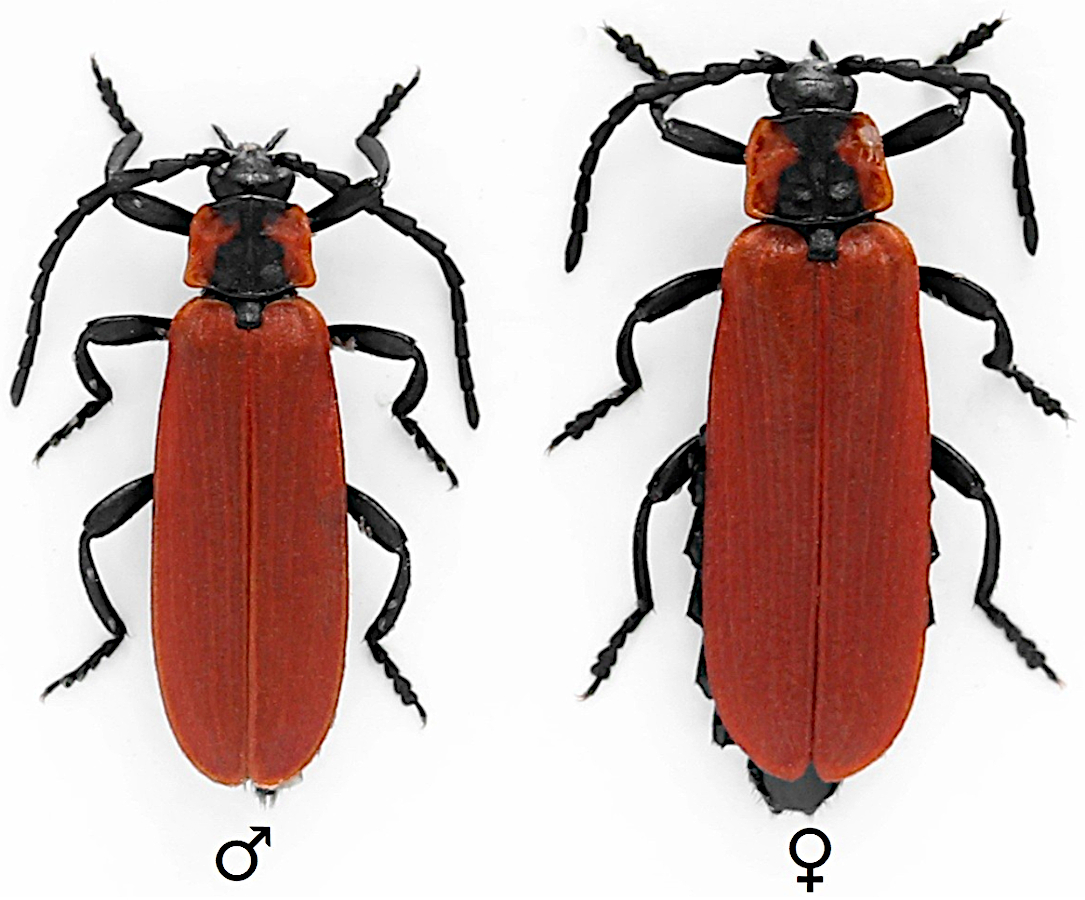
The Lycidae family comprises medium-sized, predominantly tropical beetles of the superfamily Elateroidea, known primarily for their strikingly sculptured elytra with longitudinal ribs and a reticulated pattern. Their colouration, dominated by deep red, orange or yellow combined with black, serves an important biological function – acting as a so-called aposematic warning. This is because Lycidae contain toxic substances in their haemolymph that deter predators. Males and females can differ significantly in body shape and wing structure (sexual dimorphism); in some lineages, females are neotenic, larval-like and remain wingless. Adults are commonly active on flowers or leaves, and many fly at dusk. The larvae, which develop in dead wood, under bark or in leaf litter, are mostly elongated to flattened, with well-developed sclerotised shields, whilst some species have so-called ‘trilobite-like larvae’. Lycidae play a significant role in forest ecosystems – in the Czech Republic, particularly in moist forest ecosystems – their larvae contribute to the decomposition of organic matter and the adults are important components of aposematic mimicry complexes.
Number of Species:
| World | 4 600 | |
| Palaearctic Region | 344 |
| Europe | 16 | |
| Central Europe | 9 |
 |
Family Card |
LYCIDAE (Laporte, 1838) |
Calochrominae (Lacordaire, 1857) |





Erotinae (LeConte, 1881) |
Erotini (LeConte, 1881) |