The Family Atlas |
| Processing Status: | ||
| 4 / 4 | 100% | |
| Size of Species: 4 - 18 mm |
| Tarsal Formula: 5-5-4 |
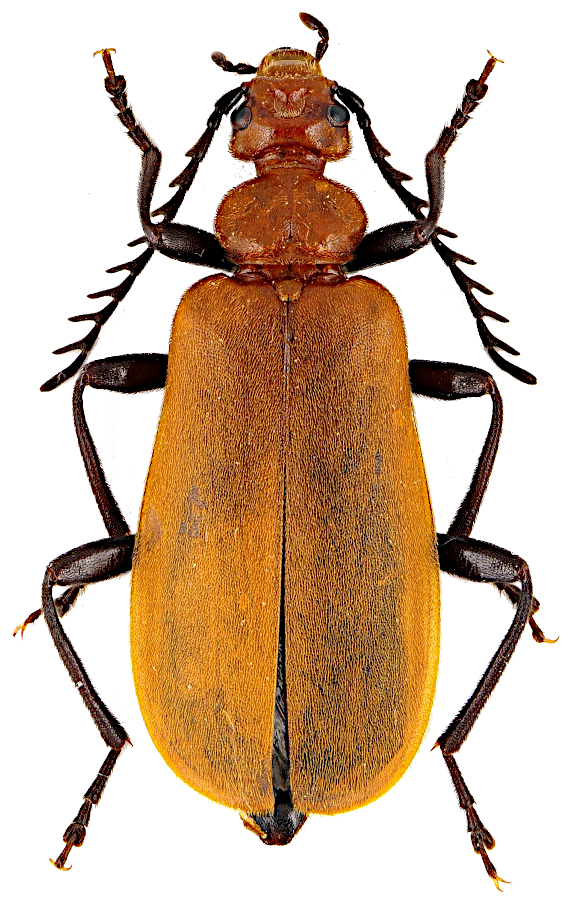
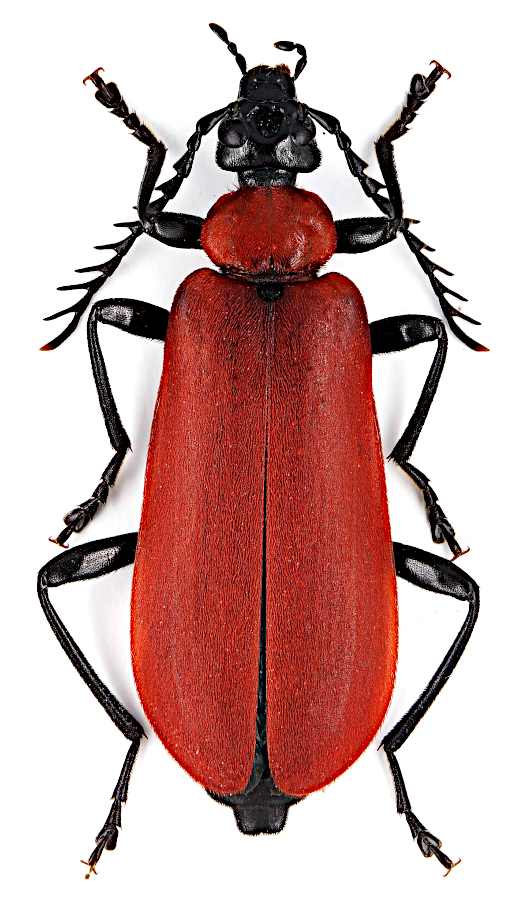
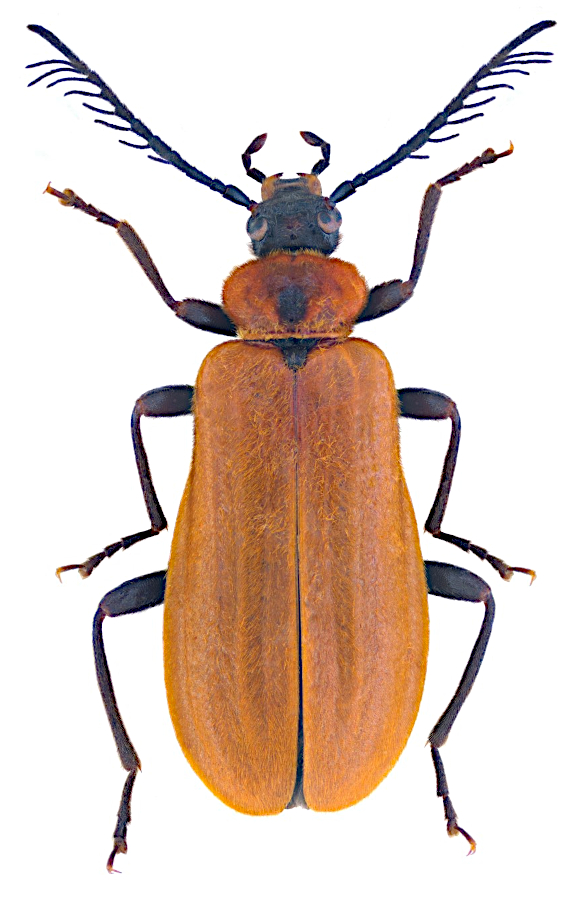
Pyrochroidae are small to medium-sized members of the superfamily Tenebrionoidea, often conspicuous for their red to orange-red colouration, from which they derive their English name ‘fire-coloured beetles’. The family is characterised by a distinctive body shape with a ‘neck’ behind the head, and in males, often very prominent antennae, which may be comb-like to fan-shaped. Members of the family are distributed worldwide, but the greatest diversity is found in the temperate zones of both hemispheres, comprising approximately 170 described species in more than 30 genera. Adults inhabit the edges of deciduous and mixed forests, where they seek out decaying wood, flowers and sites where buprestids are found. The larvae live hidden beneath the bark of dead trees, where they feed on fungi or hunt other small insects. An exceptionally interesting biological trait of the group is so-called canthariphily – males of some species actively seek out blister beetles (Meloidae) and pill beetles (Oedemeridae) to obtain the toxic terpene cantharidin from them, which they then use as an attractant for females and to protect their eggs.
Number of Species:
| World | 167 | |
| Palaearctic Region | 92 |
| Europe | 6 | |
| Central Europe | 4 |
 |
Family Card |
PYROCHROIDAE (Latreille, 1806) |
Agnathinae (Lacordaire, 1859) |
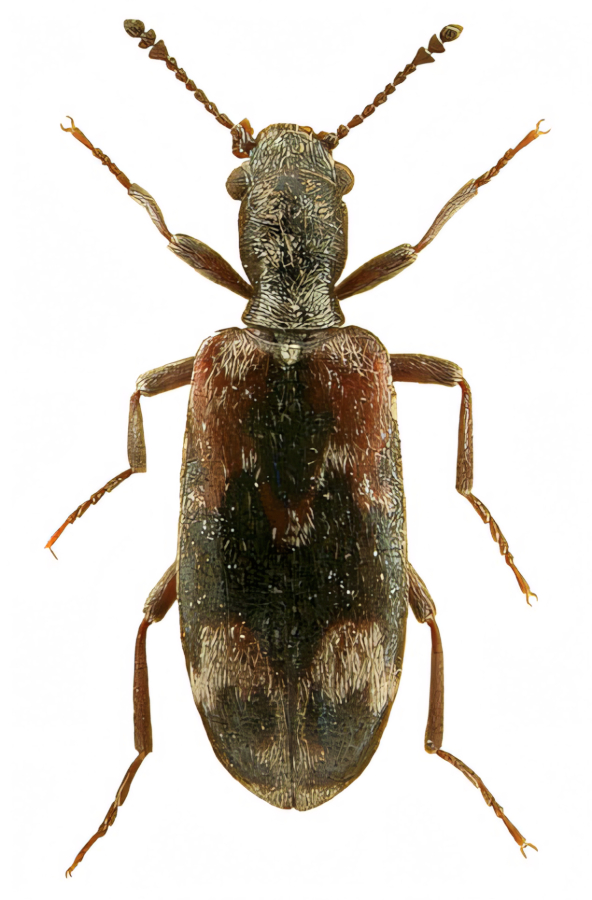





Pyrochroinae (Latreille, 1806) |