The Family Atlas |
| Processing Status: | ||
| 6 / 8 | 75% | |
| Size of Species: 1.3 - 4.5 mm |
| Tarsal Formula: 4-4-4 |
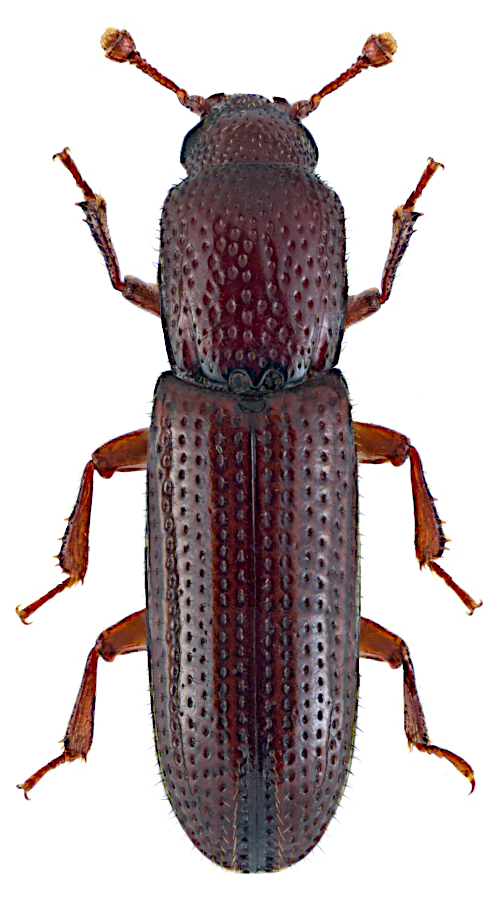
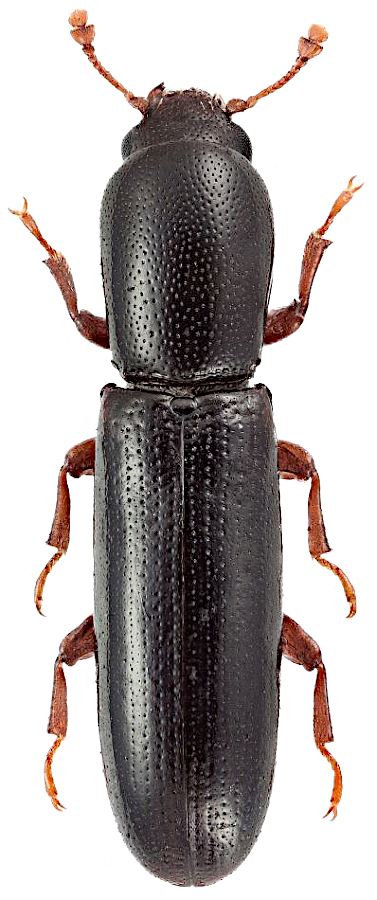
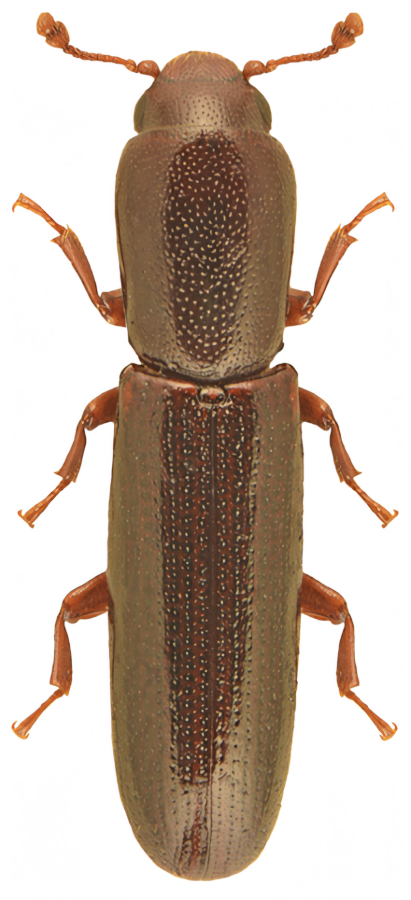
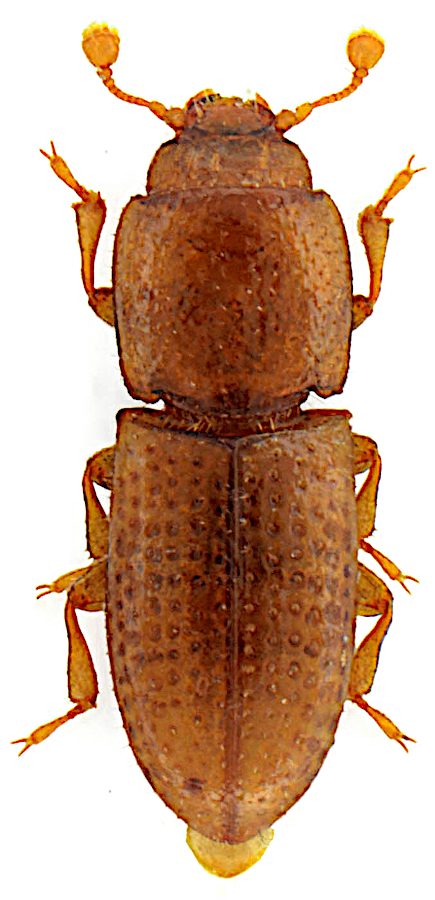
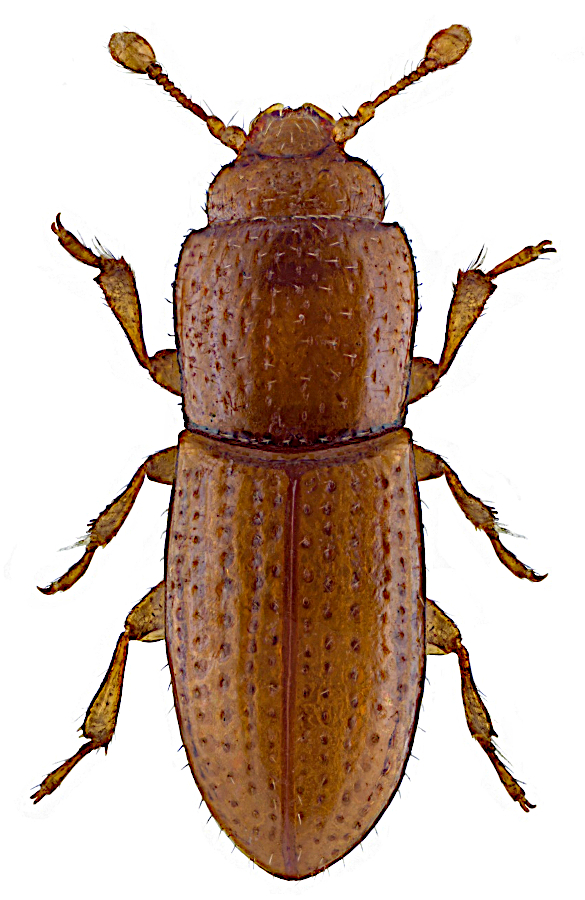
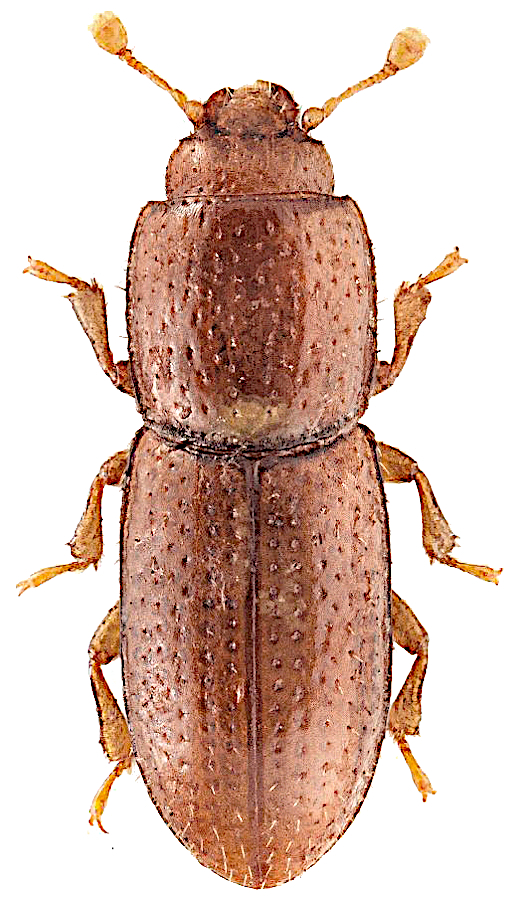
The Teredidae are a small and little-studied family of beetles, whose members, despite their modest size, are an example of specialisation in the environment of old and decaying wood. The family comprises approximately 160 species, classified into 10 genera and distributed throughout the world with the exception of South America. It comprises minute, generally cylindrical species (mostly 1.3–4.5 mm), brown to black in colour, which live predominantly beneath the bark in the tunnels of wood-boring beetles or in leaf litter. Members of the subfamily Anommatinae form a distinct group, living in decaying organic material – they are wingless, with reduced eyes or completely blind, and many live underground. Members of the subfamilies Teredinae and Xylariophilinae are considered exclusive mycophages, i.e. animals that feed on fungi, with Teredinae larvae feeding on spores in the tunnels of bark beetles and other wood-boring pests. Although the family Teredidae is of very ancient origin – fossils have been found in Burmese amber dating from the Middle Cretaceous – it has only been recognised as a separate taxonomic unit since 2015, when it was separated from the family Bothrideridae.
Number of Species:
| World | 160 | |
| Palaearctic Region | 122 |
| Europe | 105 | |
| Central Europe | 18 |
 |
Family Card |
TEREDIDAE (Seidlitz, 1888) |
Anommatinae (Ganglbauer, 1899) |







Teredinae (Seidlitz, 1888) |
Teredini (Seidlitz, 1888) |