The Family Atlas |
| Processing Status: | ||
| 18 / 18 | 100% | |
| Size of Species: 2 - 7 mm |
| Tarsal Formula: 5-5-4 (most genera of the Zopherinae); 4-4-4 (most genera of the Colydiinae plus the following genera of the Zopherinae: Pycnomerus, Pycnomerodes, Orthocerodes, Notortocerus); 3-3-3 (rarely in Colydiinae) |
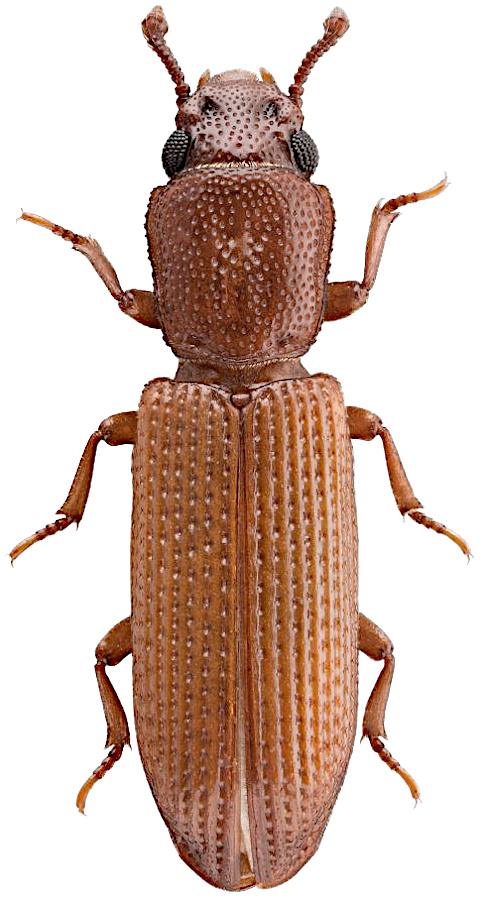
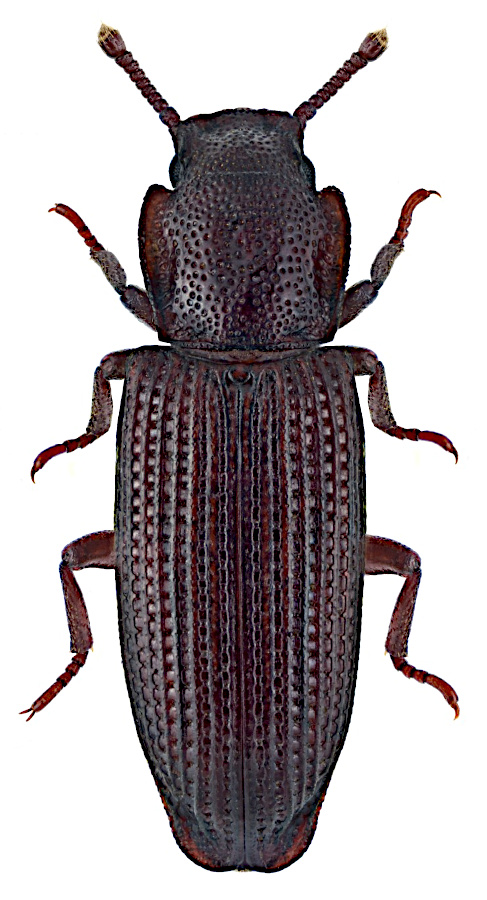
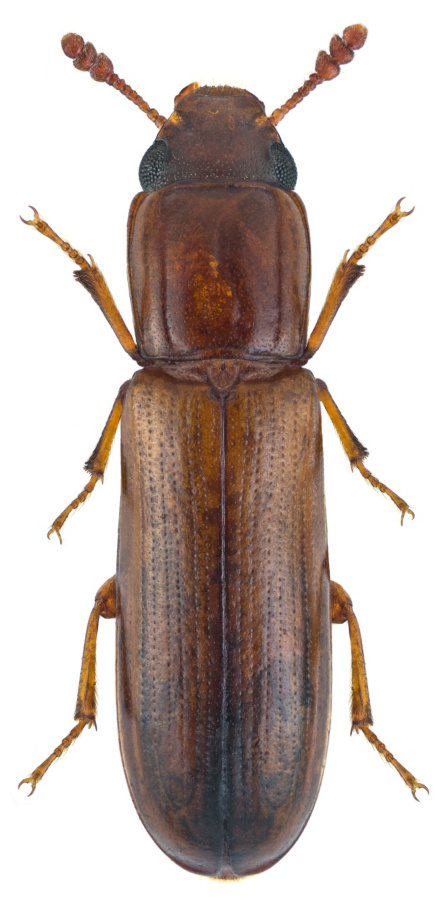
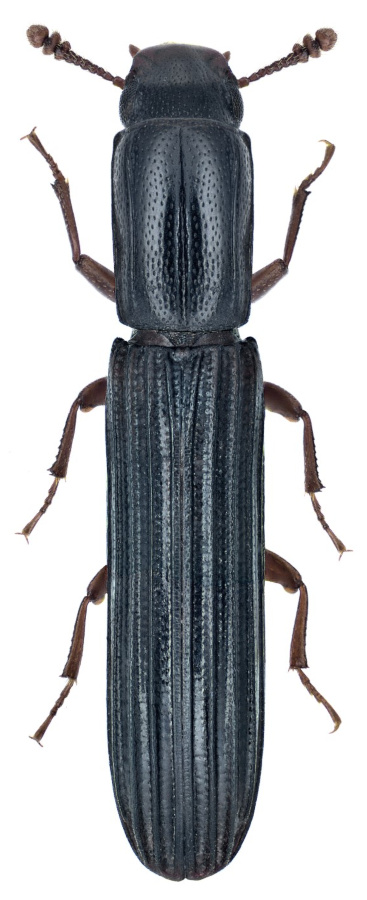
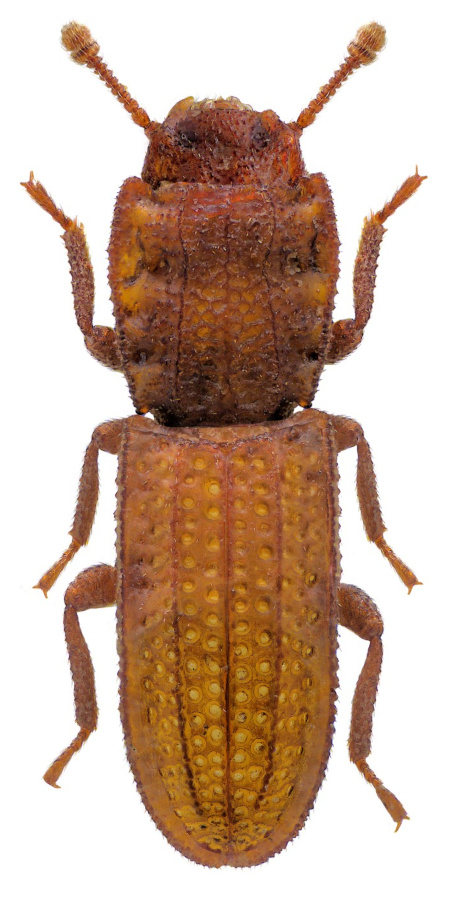
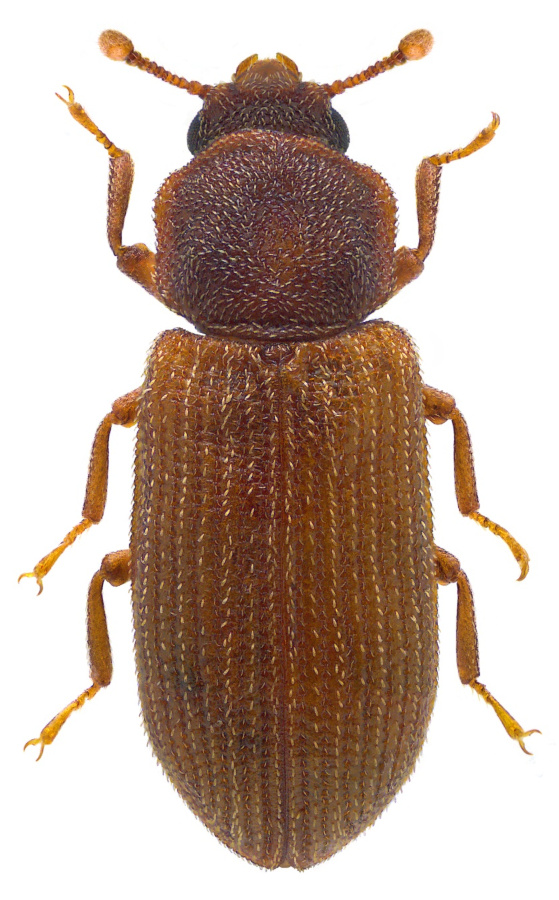
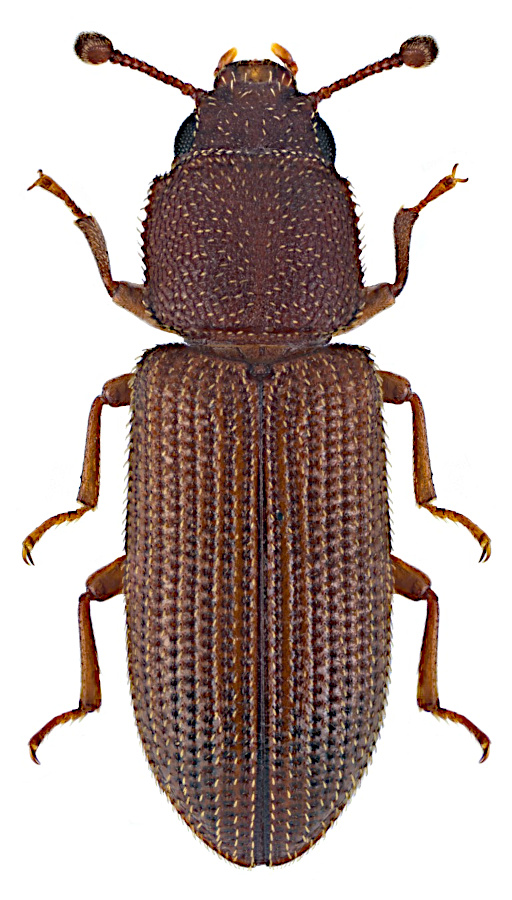
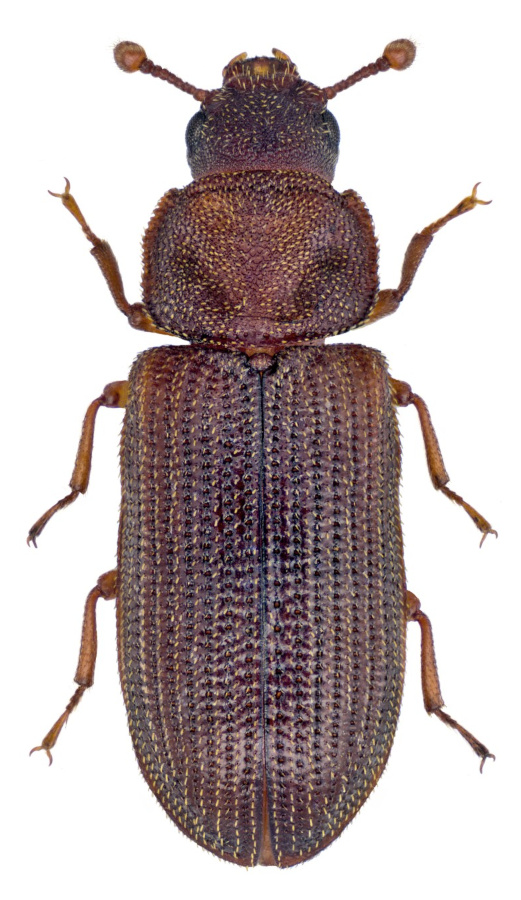
The family Zopheridae belongs to the superfamily Tenebrionoidea and comprises a group of species known, amongst other names, as ‘ironclad beetles’, characterised by an exceptionally hardened cuticle. These beetles are found virtually all over the world, with the greatest diversity in tropical and subtropical regions. A typical characteristic is a cylindrical or flattened body, which is extremely heavily sclerotised, often with tightly fused elytra that significantly restrict mobility but provide high mechanical resistance. Many species are morphologically cryptic, resembling pieces of wood or bark, which is an adaptation to life beneath tree bark and in decaying wood. Ecologically, members of the family are predominantly saproxylic, i.e. dependent on dead wood, fungi or lichens, whilst some species are predatory or specialise in living plant tissues. The family has undergone a significant taxonomic revision in recent decades, with previously separate families (e.g. Colydiidae and Monommatidae) being merged into the broader family Zopheridae.
Number of Species:
| World | 1 700 | |
| Palaearctic Region | 290 |
| Europe | 91 | |
| Central Europe | 25 |
 |
Family Card |
ZOPHERIDAE (Solier, 1834) |
Colydiinae (Billberg, 1820) |
Colydiini (Billberg, 1820) |






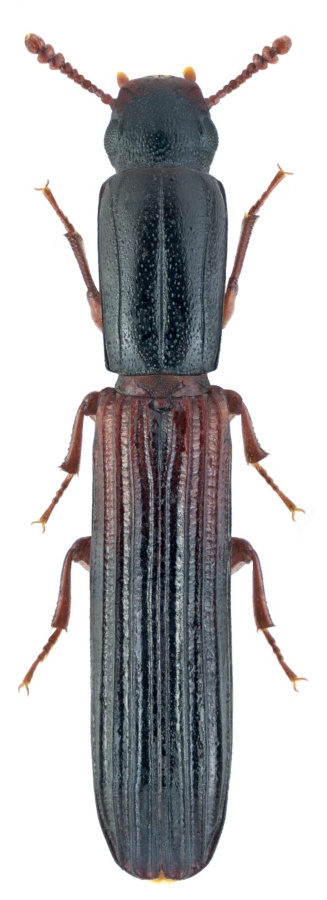
Orthocerini (Blanchard, 1845) |
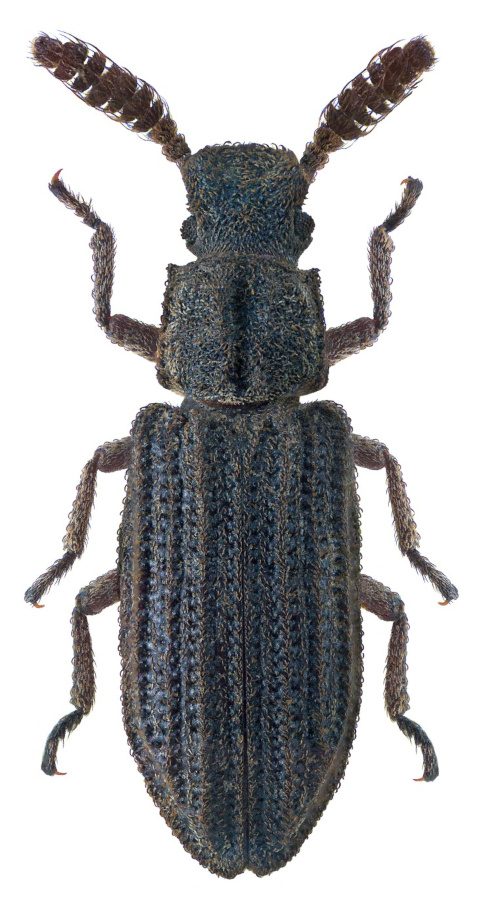
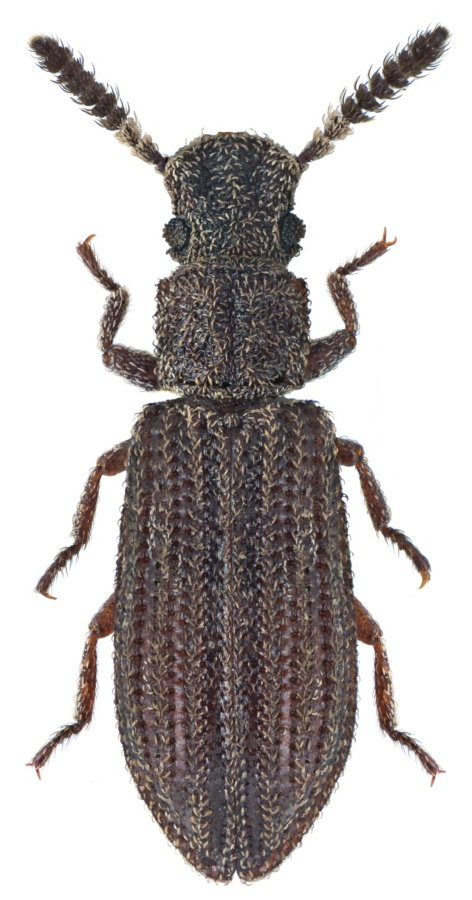
Rhopalocerini (Reitter, 1911) |
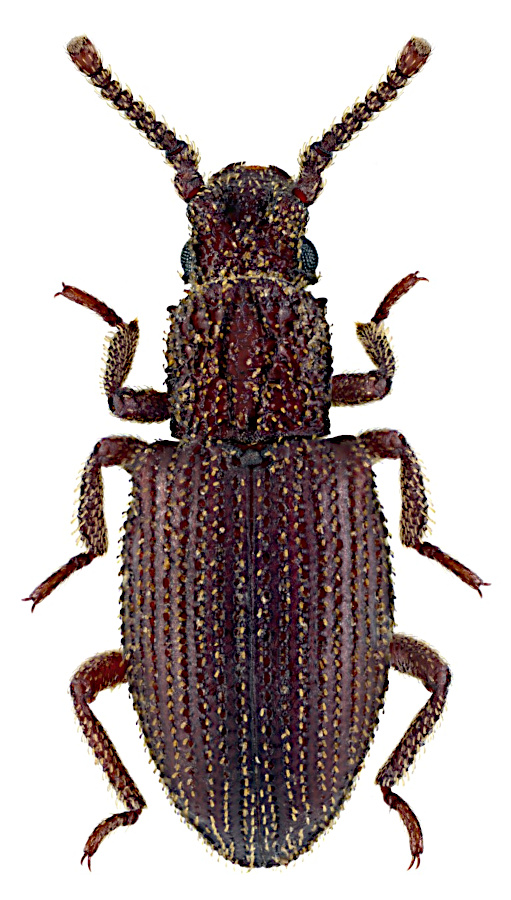
Synchitini (Redtenbacher, 1845) |
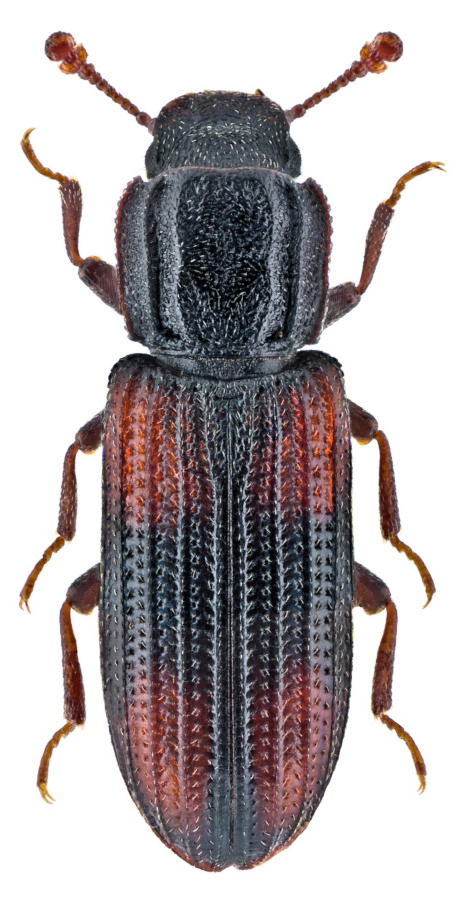
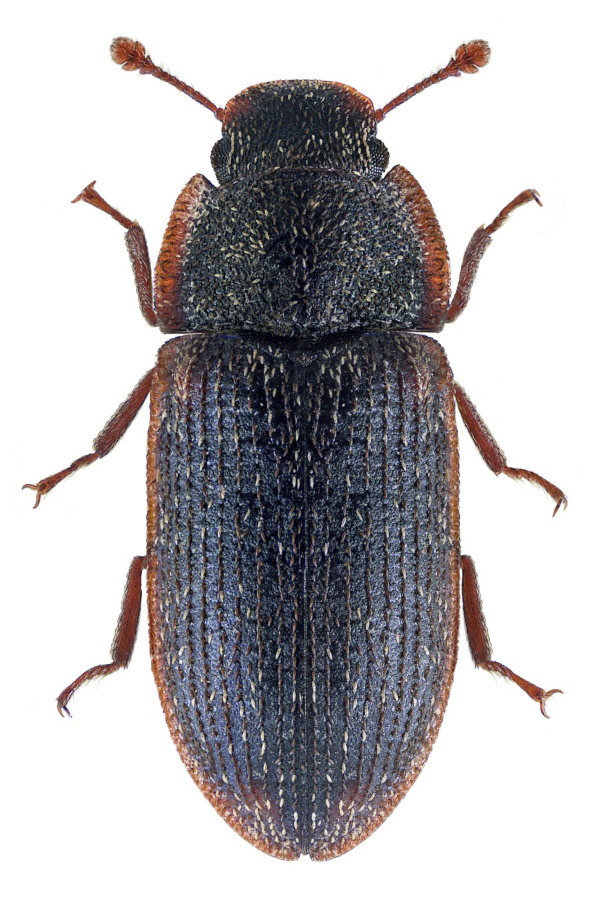
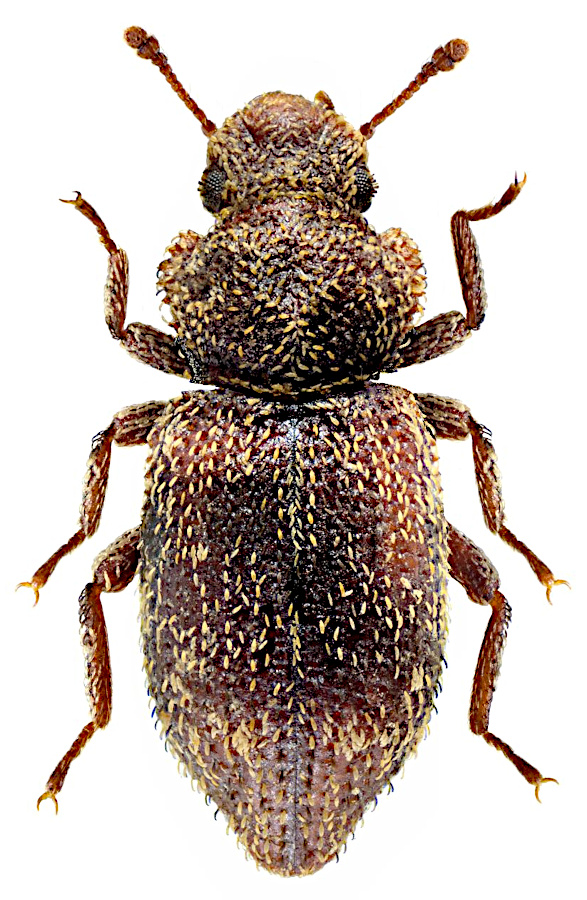
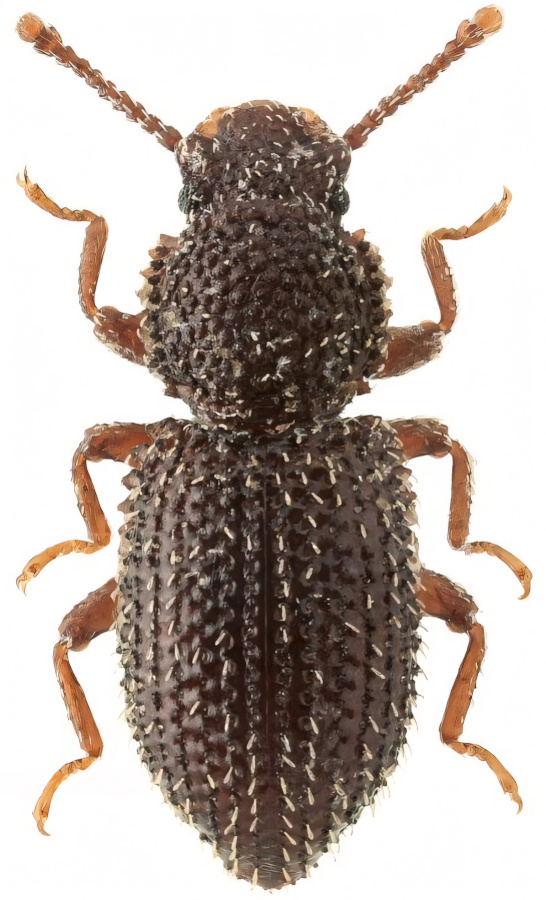
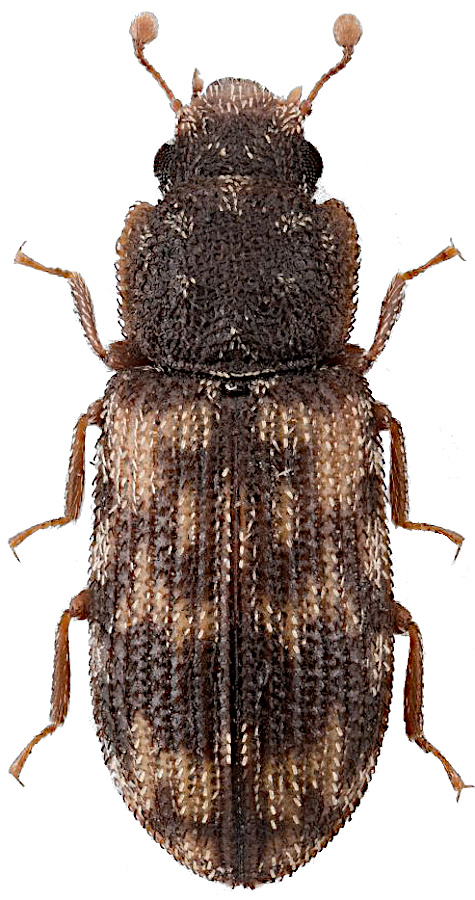
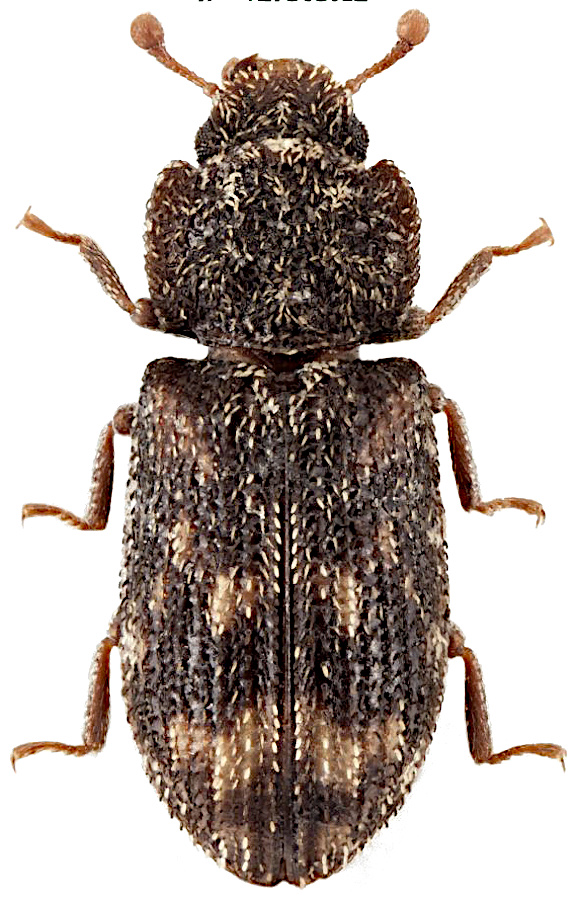
Zopherinae (Solier, 1834) |
Pycnomerini (Erichson, 1845) |