
Coleoptera > Polyphaga > Clambiformia > Clamboidea > Clambidae
- LAT: Clambides (Jacquelin du Val, 1857)
original name - LAT: Calamptilidae (Gistel, 1856)
less commonly used - LAT: Calyptomeridae (Oehme, 1901)
sometimes referred to as a subfamily or synonym
- CZ: no Czech name
- SK: Slovak name not available
- PL: Polish name not available
- AT/DE/CH: Punktkäfer
- HU: Hungarian name not available
- EN: Minute Fungus Beetles, Fringe-winged Beetles
- RU: Klambidy (Klambidy)
The name of the family Clambidae is derived from the name of the generic taxon, namely the genus Clambus, which is the type genus of the family.
- Clambus: The name comes from the Latin word clambus, which is probably derived from the Greek word klambos (κλαμβosˊ) and means "curved, bent" or "bent".
This etymology refers to the spherical, strongly arched body shape of members of this family, which is conspicuous in many species and serves as a defence mechanism. The beetles curl into a ball and fold their legs and antennae when threatened.
History
The family Clambidae has historically often been placed in the superfamily Staphylinoidea associated with other families, notably Leiodidae and Ptiliidae. At one time it was even considered a subfamily of Leiodidae. However, it was originally described as a separate family by Jacquelin du Val as early as 1857. In 1908, Austrian entomologist Hermann Kolbe proposed a new superfamily for the Clambidae and related families, which is now generally accepted as Clamboidea.
Robert Crowson pointed out in 1960 (and later 1979) that the characteristics of the Clambidae were not typically "staphylinoid" and therefore placed them, along with the families Eucinetidae and Helodidae (Scirtidae), in their own superfamily "Eucinetoidea". More recent phylogenetic studies (especially molecular) have confirmed its position as a sister group to the family Derodontidae or its close relationship to the superfamily Byrrhoidea. However, in the current taxonomic system, the separate superfamily Clamboidea is usually still recognized. Valid recognition as a separate family within the superfamily Clamboidea has been accepted since the second half of the 20th century (e.g. Lawrence & Newton, 1995).
Moreover, recent molecular studies suggest that Clambidae, together with Eucinetidae, do not belong to the traditional Scirtoidea but rather to the separate superfamily Clamboidea according to phylogenomic analyses.
In terms of research, there are generic fossils, such as Eoclambus from the Lebanese Amber (Early Cretaceous age), which confirm the very old occurrence of this family.
Morphology
The family Clambidae includes very small, inconspicuous beetles, often overlooked because of their size. The smallest species are around 0.5 mm in size. The largest species do not exceed 2.0 mm in size, with most species ranging from 0.8 to 1.5 mm.
The body is spherical to oval, very strongly arched, resembling a sunflower. Their morphology allows the head and front part (prothorax) to "roll" downwards under the body, where they simultaneously retract the legs and antennae to form an almost spherical shape. They use this as a defence mechanism when disturbed or threatened. The head is large and can be almost completely hidden under the shield. They are typically monochromatic in colour, most commonly in shades of yellow, yellow-brown, red-brown to dark brown or black. The surface of the body may be shiny, but is more often finely haired. The wings often have long fringe hairs on the edges ('fringe wings'), which give the family its English name.
The antennae are club-shaped, composed of 8 to 10 segments, with a clearly separated two-lobed club-shaped stalk. The carpels are usually short, with a margin often fringed with hairs. An important feature is the broad, lamellate legs (especially the tibial segments), which resemble fins and allow the beetles to move rapidly through the substrate.
Bionomy
Beetles live a secretive lifestyle and like moisture. Most species live in deciduous and mixed forests and wet meadows or wetlands. They can be found in decaying organic material such as decaying leaves or decaying plant debris, then on moulds and in fungi (especially slime and slime moulds), under the bark of old trees, in moss or under stones. Some species are associated with tree cavities or insect nests (e.g. ants). Findings are also recorded in hay stacks, old stacks, compost or silage.
Representatives of Clambidae are primarily mycophagous. They feed mainly on spores and mycelia of fungi and slime molds (Myxomycetes) that grow on smouldering wood and organic material. The beetles are active at night or in humid conditions. They are very good at moving quickly in loose substrate. The larvae have a similar mycophagous lifestyle and develop in the same substrate as the adults.
Approximate numbers of representatives of selected taxonomic units in each region
| Taxonomic unit |
Region | |||||||||
| Czech republic |
Central Europe |
Europe | Afrotropical | Australian | Nearctic | Neotropical | Oriental | Palaearctic | World | |
| Subfamily | 2 | 2 | 2 | 3 | 2 | 2 | 3 | 3 | 2 | 3 |
| Tribus | 0 | 0 | 0 | 0 | 0 | 0 | 0 | 0 | 0 | 0 |
| Genus | 2 | 2 | 2 | 3 | 3 | 2 | 4 | 2 | 3 | 5 |
| Species | 8 | 17 | 22 | 30 | 30 | 15 | 40 | 45 | 40 | 170 |
The Largest
The family is relatively small and the species differ from each other mainly in very small characters. Due to the overall small size range of each species in the family (0.7 - 2 mm), the largest species will be at the upper end of this range (~2 mm). In the world, these will be mainly species from the genera Clambus and Calyptomerus. Of our species, Calyptomerus alpestris is the largest representative.
The Smallest
The smallest species of this family in the world come from representatives of the genus Loricaster, with a length approaching 0.5 mm. Of the Czech representatives, the smallest species is Clambus pubescens, which measures 0.8 to 1.8 mm.
The Rarest
Many species from tropical areas are rare and known from only a few localities. The genus Sphaerothorax, which inhabits Australia and New Zealand, includes species often tied to specific ecosystems. According to entomological surveys, the occurrence of Clambidae in the Czech Republic is relatively modest. The rarity is often due to the hidden way of life.
Attractions
- Rolling the body into a ball: Behaviorally, the ability of some species to "roll" their bodies is very interesting—they bend their heads and prothorax, creating an almost spherical shape. This is probably an adaptation to protect themselves from predators or physical damage.
- Ability to jump (movement): some species of the genus Clambus have a unique mechanism that allows them to jump. In doing so, they use the tension between their trunks and rump, or their specially adapted legs, which allows them to bounce off the substrate.
- Wings: Many members of the family Clambidae have extremely delicate, fringed hind wings, similar to the wings of the feather wings (Ptiliidae), an adaptation for flight in such small organisms.
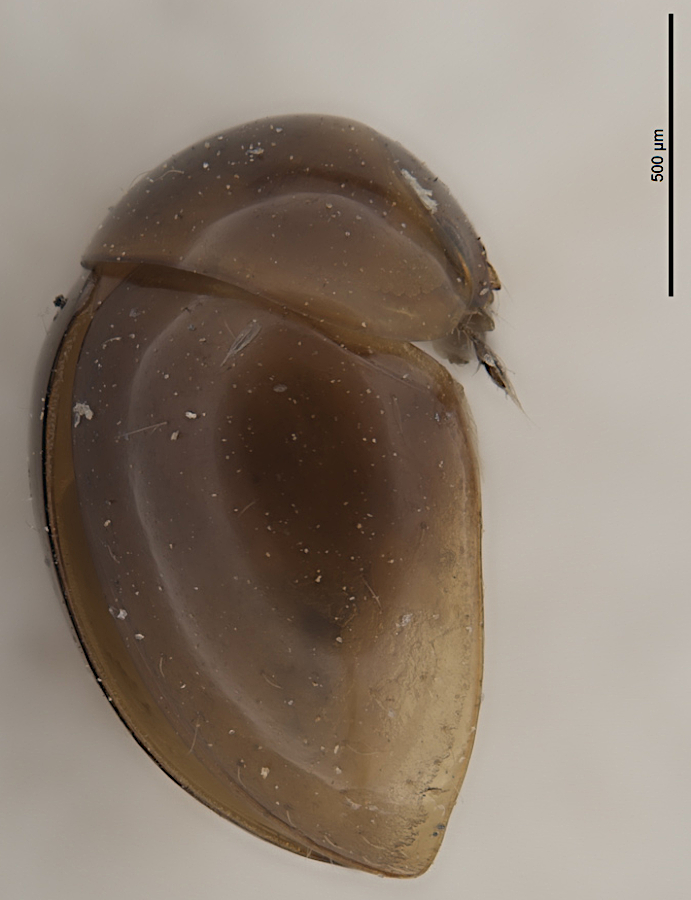
Examples of worldwide representatives of the family
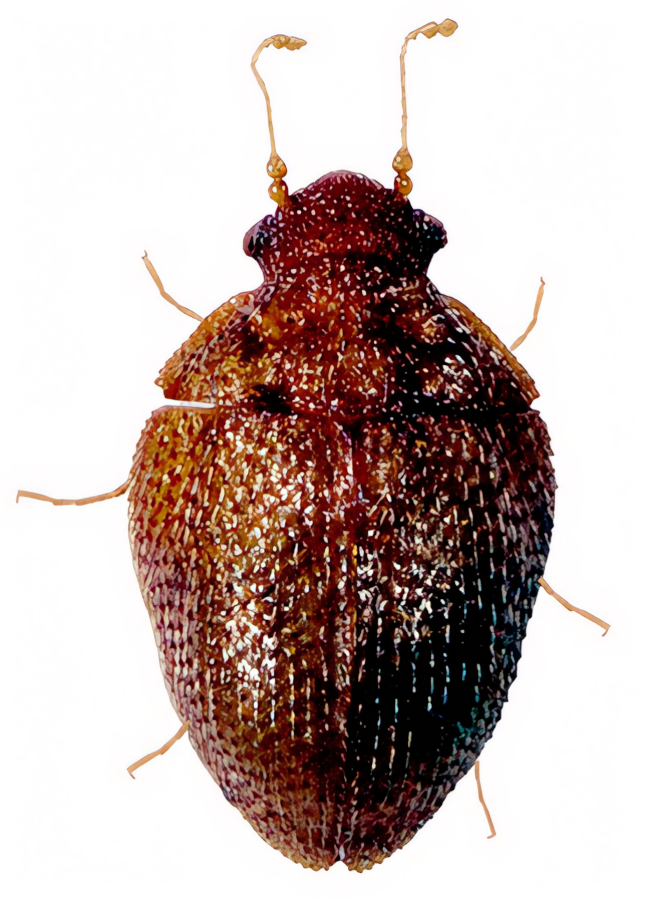

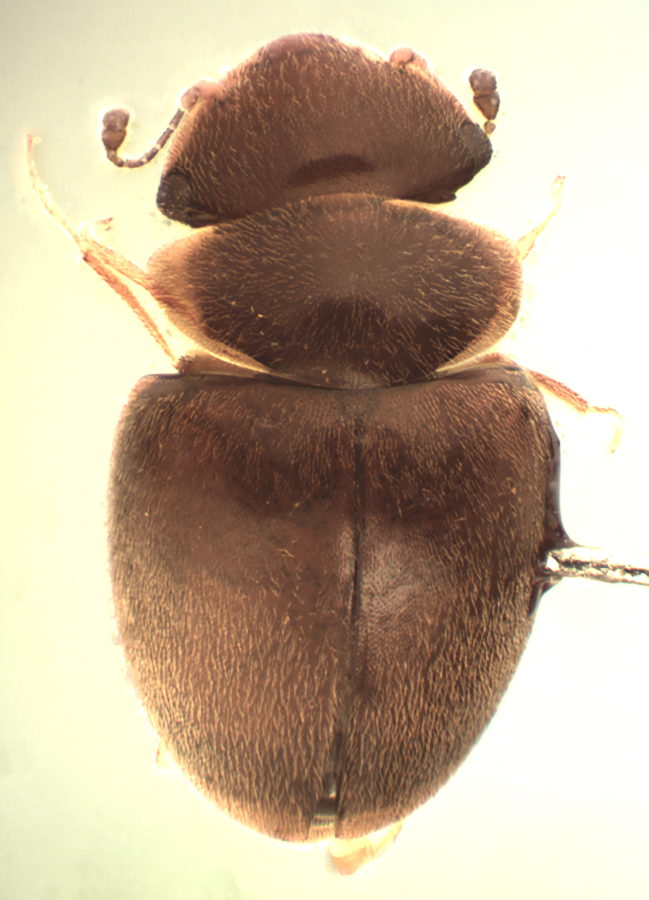
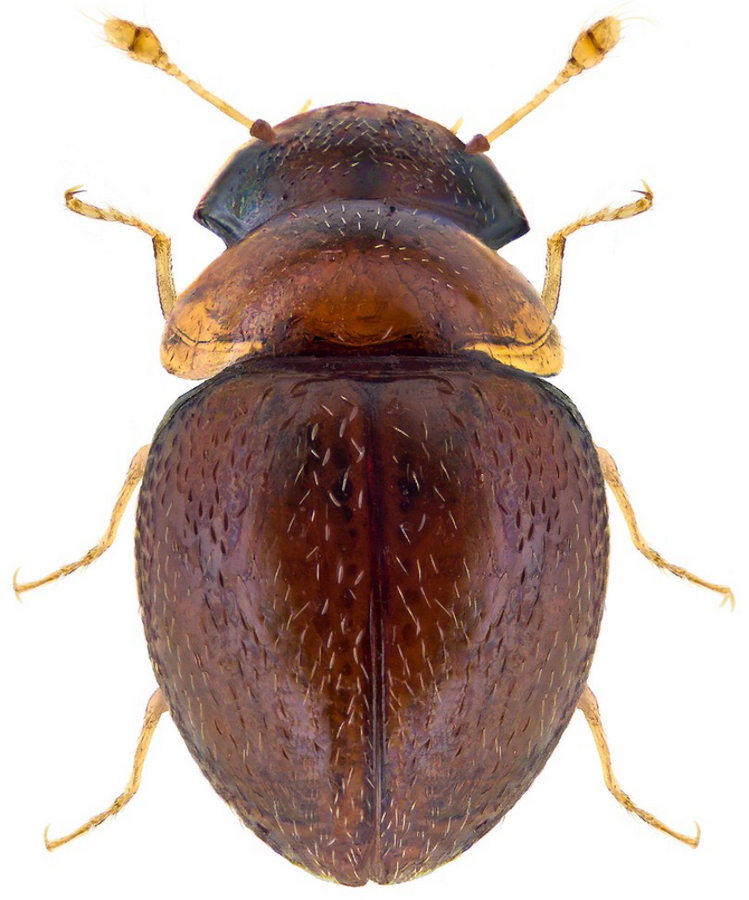
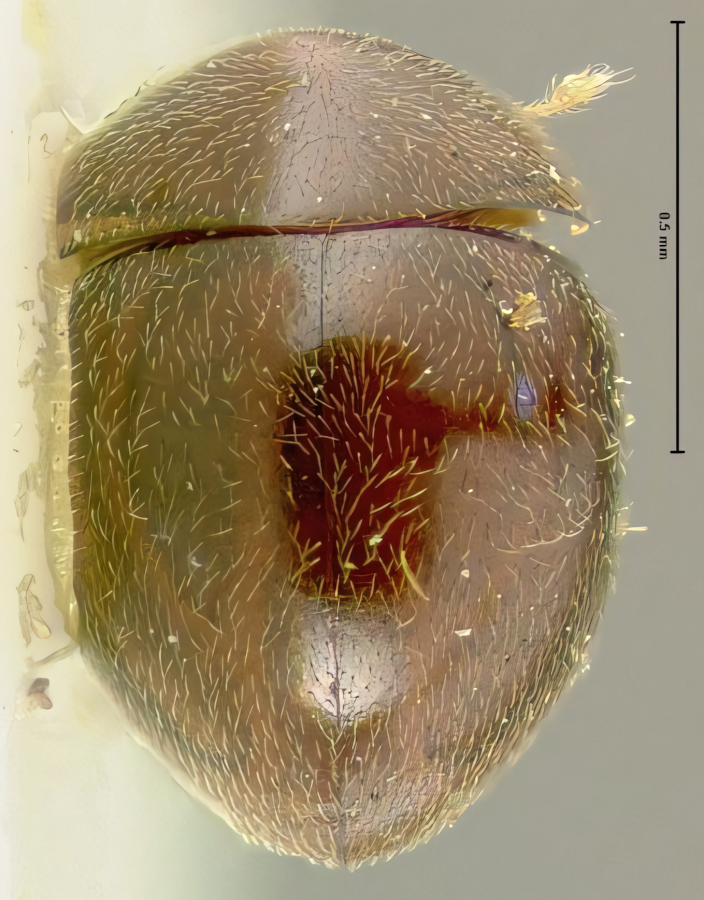
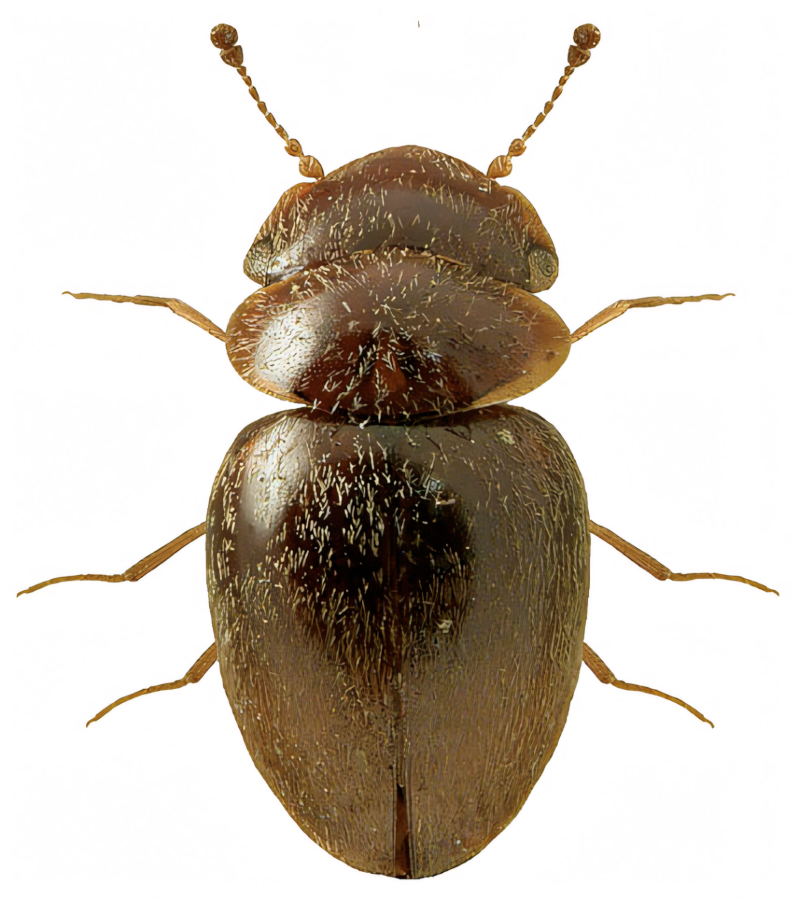
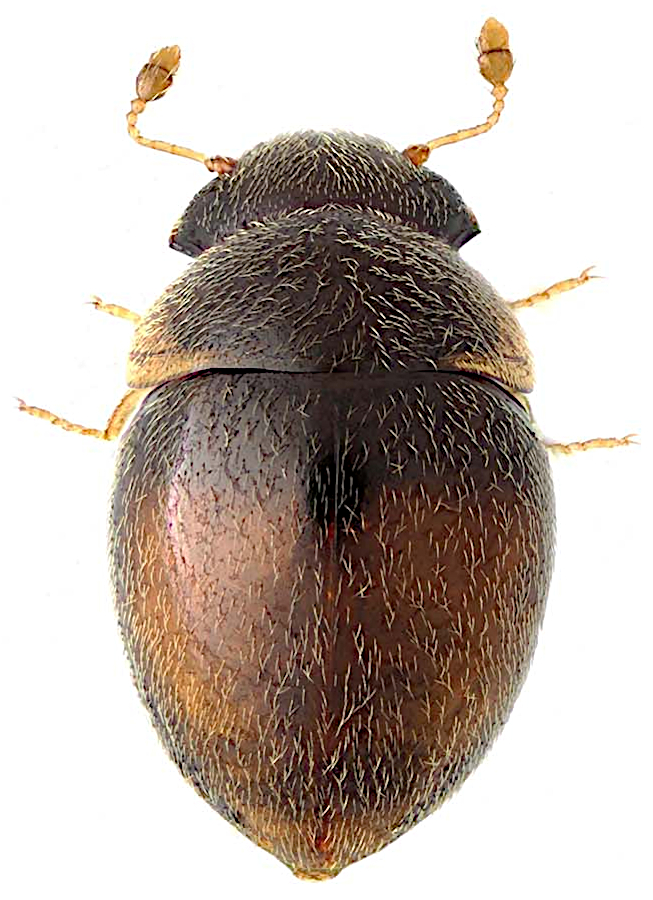
Examples of Czech representatives of the family

- Beutel R., Leschen R.: Handbook of Zoology, Arthropoda: Insecta, Coleoptera: Beetles, Ed. 2, Volume 1: Morphology and Systematics (Archostemata, Adephaga, Myxophaga, Polyphaga partim), Walter de Gruyter GmbH, Berlin/Boston, 2016
- Bouchard P.: The Book of Beetles, A Lifesize Guide to Six Hundred of Nature’s GEMS, Ivy Press, East Sussex, 2014
- Dlouhý F.: Brouci, Soustavný popis nejdůležitějších českých brouků s návodem, kterak zakládati sbírky broukův. 2. vydání, Nakladatel I. L. Kober, Praha, 1912
- Hůrka K.: Brouci České a Slovenské republiky, -, Nakladatelství Kabourek, Zlín, 2017
- Klapálek F.: Atlas brouků středoevropských, část 1, Nakladatel I. L. Kober, Praha, 1903
- Kliment J.: Čeští brouci, Dílo o broucích Čech, Moravy a Slezka, Vydal autor, 1899
