
Coleoptera > Adephaga > (Hydradephaga) > (Dytiscoidea) > Noteridae
- LAT: Phreatodytidae
(formerly considered a separate family, now sometimes classified as a subfamily of Noteridae or a closely related group)
- CZ: Vlhkomilovití
- SK: Vlhkomilovité (hladináčiky)
- PL: Pływaczkowate
- DE/AT/CH: Ruderschwimmer (Schein-Schwimmkäfer, Sumpfwasserläufer)
- HU: Álsiklók
- EN: Burrowing water beetles (noterid beetles)
- RU: Noterids (Notheridy)
The name of the family Noteridae is derived from the name of the type genus Noterus.
- The name of the genus Noterus comes from the Greek word "νοτερός" (noteros), which means "wet", "moist" or "swimmer".
This name is logical, as it refers to a group of aquatic beetles (Hydradephaga) that move in aquatic environments.
History
The Noteridae are small aquatic beetles of the suborder Adephaga, which are closely related to the Dytiscidae. The family Noteridae has often been arranged in the past as a subfamily (Noterinae) within the family Dytiscidae (Diving Beetles). The separation into a separate family was made on the basis of differences in morphology, particularly in the presternal keel (prosternal process) and leg structure of the larvae. Formal taxonomic recognition as a separate family Noteridae was made in 1860 by Carl Gustaf Thomson. In current phylogenetics, the position of Noteridae as a separate family, closely related to Dytiscidae, is generally accepted, although the exact relationships within the superfamily Dytiscoidea are still under investigation.
Morphology
Representatives of the family Noteridae are small to medium-sized beetles. The smallest species may be only about 1.5 mm in length. The largest species reach a length of around 5-6 mm. In the Czech Republic, most species range from 3.5 to 5 mm.
The body is usually oval, smooth, strongly convex (highly convex), with a shiny, droplet-like surface. They have a short and broad head, which is often partially retracted into the thorax. The typical feature is a strongly developed prosternal process (prosternal keel) which is directed backwards and fits into a depression in the mid-thorax. This keel stiffens the body and aids in swimming and possibly burrowing. The hind legs, like those of divers, are adapted for swimming - they are fitted with quills and serve as oars. Colouration is usually yellow to reddish yellow (rusty), often monochrome. Sometimes the head and/or shield may be lighter. Tropical representatives may have other colourations.
Sexual dimorphism in the Noteridae is generally not as strongly marked as in some other families, but in many species the differences between the sexes are rather subtle and require microscopic inspection. Males have enlarged middle segments of the antennae, tibiae, and first segment of the front feet.
Bionomy
The Noteridae inhabit stagnant or slow-moving waters such as ponds, pools, marshes, dead-end arms of rivers or shallow margins of lakes. They prefer waters with abundant vegetation (abundant aquatic plants - e.g. redwoods and sedges - and algae). They are often found near the bottom where there is a fine substrate (mud or clay) into which they can burrow (hence the English name "Burrowing Water Beetles"). It is the ability to burrow that is the adaptation that distinguishes them from other Dytiscoidea. They range from the lowlands to the foothills, with most European species more likely to be found in the lowlands and hills.
Members of the family Noteridae are primarily carnivorous (predators), although it is thought that their diet may be mixed (omnivorous). Adults prey on small aquatic invertebrates such as mosquito larvae, ringworms or small crustaceans. They may also feed on detritus or algae. Larvae are also predatory and feed on smaller aquatic animals. A unique adaptation of larvae in some genera (e.g. Noterus) is that they puncture the respiratory tract of aquatic plants, drawing air directly from the plant's web (similar to some diving larvae), allowing them to remain underwater longer.
Approximate numbers of representatives of selected taxonomic units in each region
| Taxonomic unit |
Region | |||||||||
| Czech republic |
Central Europe |
Europe | Afrotropical | Australian | Nearctic | Neotropical | Oriental | Palaearctic | World | |
| Subfamily | 1 | 1 | 1 | 2 | 1 | 1 | 2 | 1 | 2 | 2 |
| Tribus | 1 | 1 | 1 | 2 | 1 | 1 | 2 | 2 | 3 | 3 |
| Genus | 1 | 1 | 2 | 10 | 4 | 5 | 10 | 6 | 7 | 20 |
| Species | 2 | 2 | 4 | 98 | 14 | 16 | 92 | 31 | 43 | 250 |
Largest
The family Noteridae is relatively small - comprising about 20 genera and over 250 species worldwide. Most of them are very small. The largest species are found mainly in the Neotropics and Africa, for example in the genera Suphis or Notomicrus, but even these reach a maximum of 6 mm in length. Only 2 species are found in the Czech Republic, of which the larger Noterus clavicornis can measure up to 5 mm.
The smallest
The smallest noterids are very small species, typically of the genus Notomicrus and related genera, with lengths around 1-2 mm (this is typical of some Neotropical and Palaeotropical genera). The smaller of the two Czech species, Noterus classicornis, reaches a size of 3.5 - 4.2 mm.
The rarest
Rarity is often associated with endemic species that live in cave waters or underground streams (e.g. some species of the genus Phreatodytes). It is the troglobiont (cave-dwelling) or stygobiont (groundwater-dwelling) forms that are particularly vulnerable to pollution and habitat loss. In the Czech Republic, both representatives of the family are relatively abundant throughout the territory.
Attractions
- Burrowing into mud: Their ability to burrow quickly into the sediment (mud) on the bottom is typical and is thought to be an adaptation to survive drought (estivation) when the water body becomes dry. By burrowing, they survive adverse periods in a latent state.
- Phylogenetic window. They are considered phylogenetically significant because they may represent a primitive lineage within the family Noteridae.
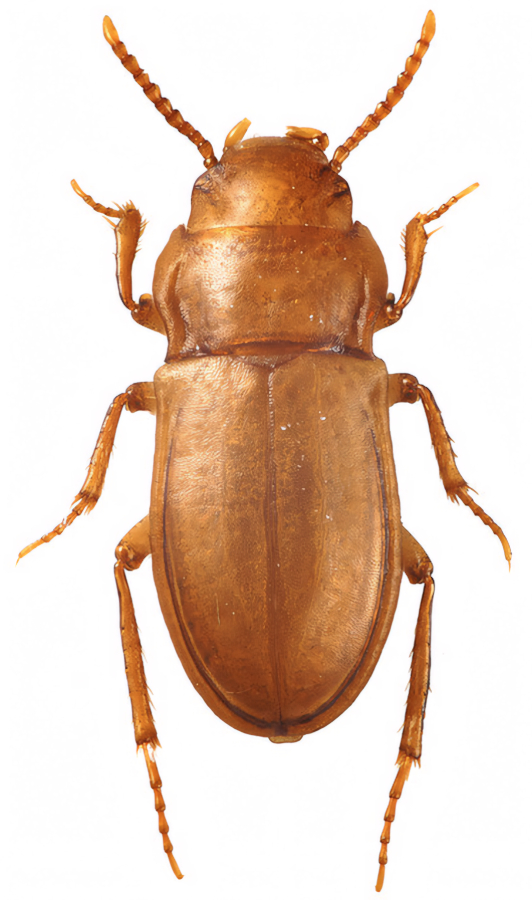
Examples of worldwide representatives of the family
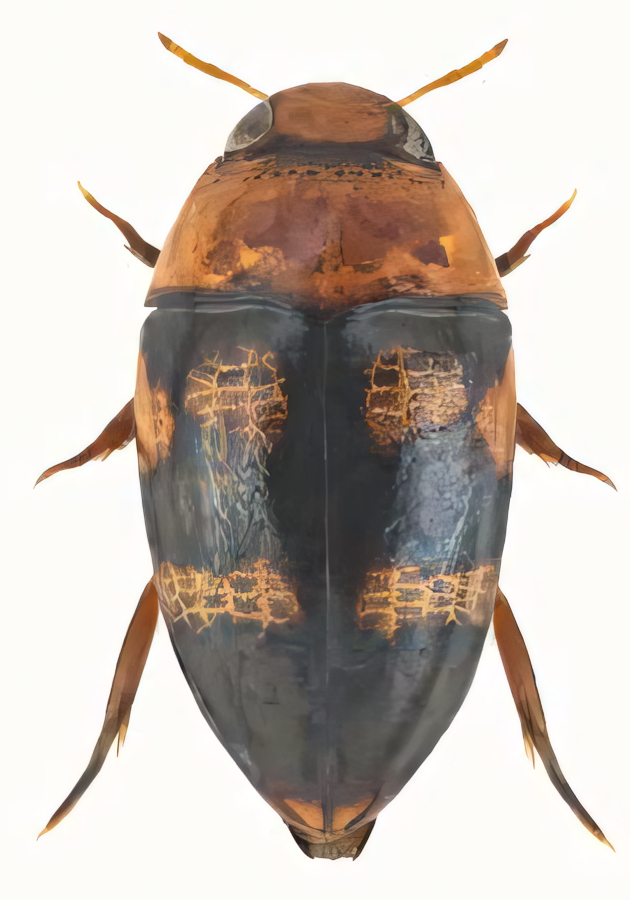

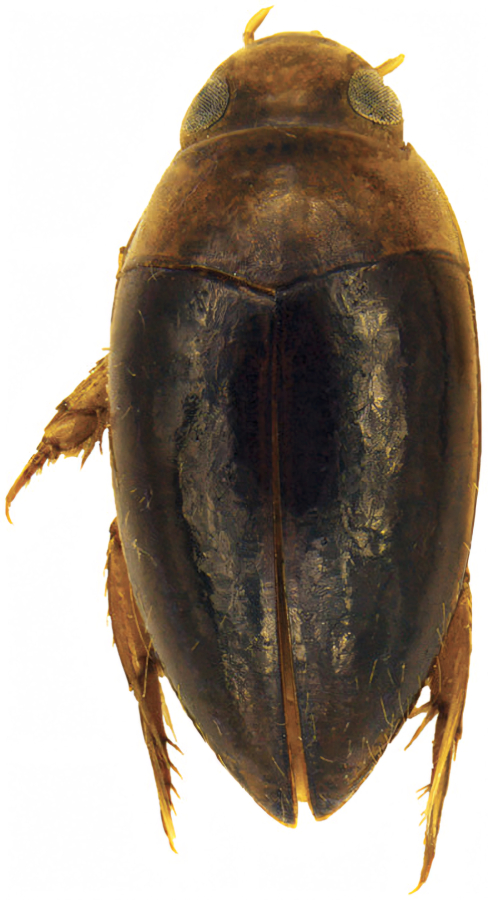
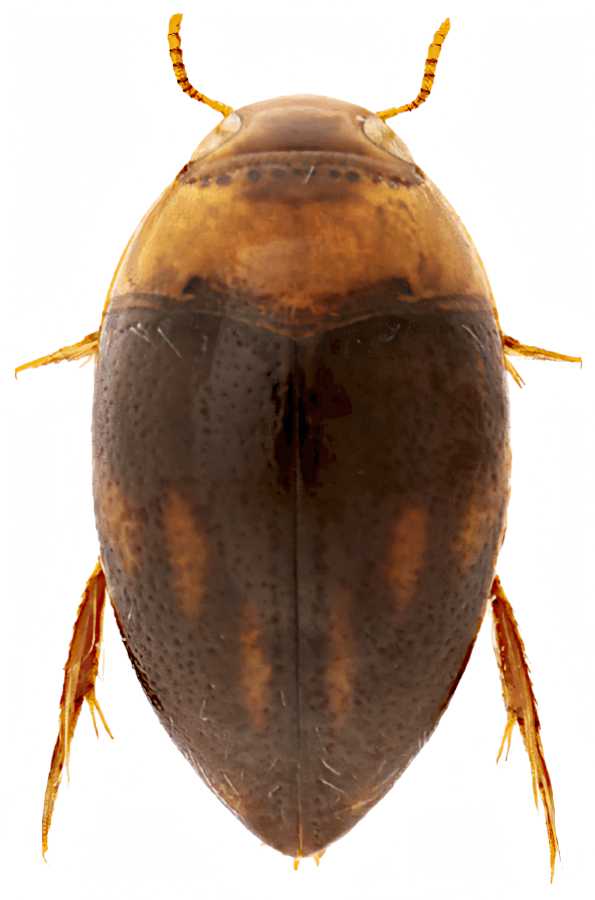
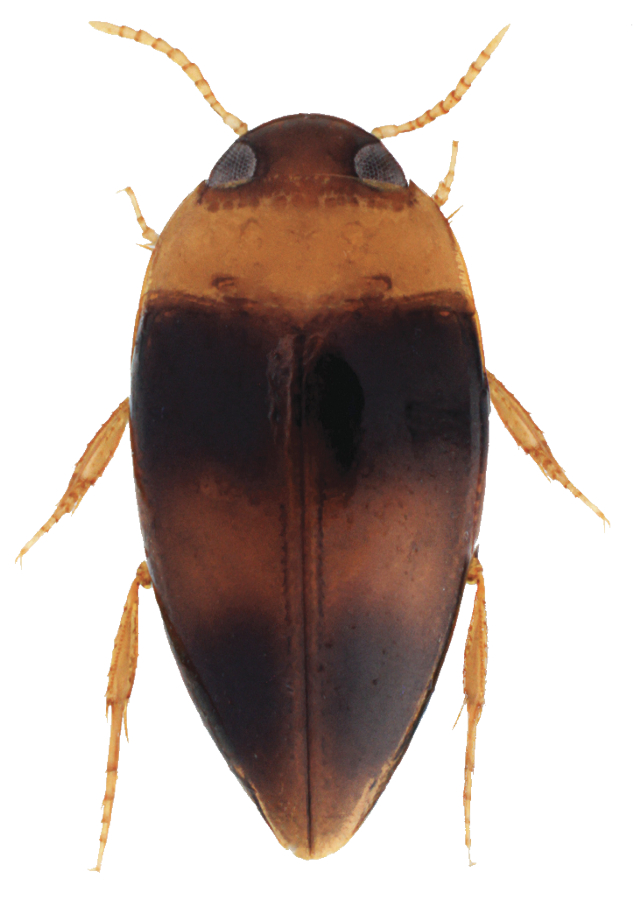
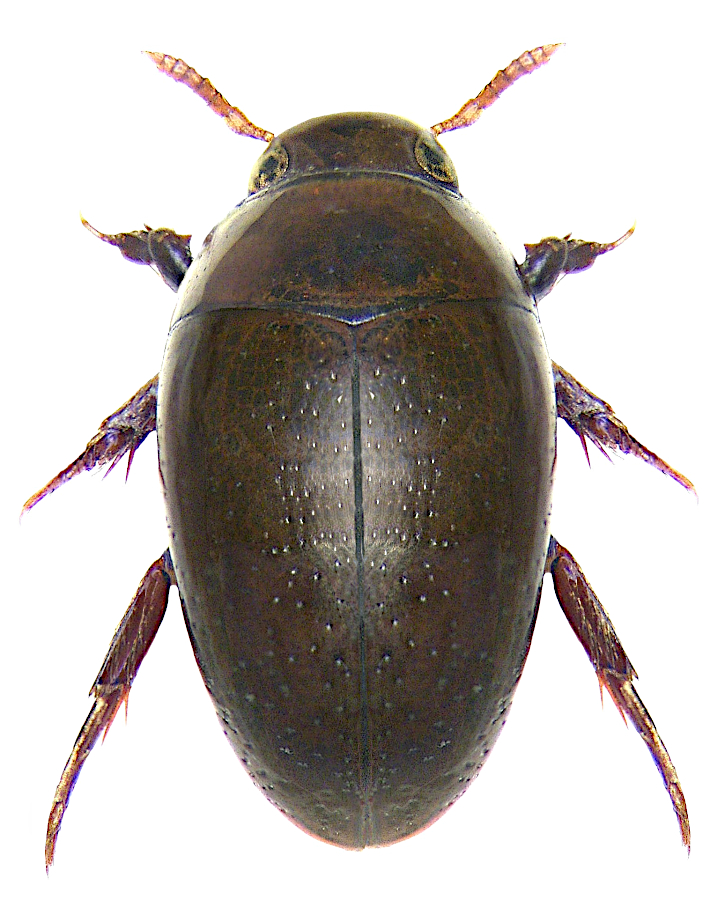
Examples of Czech representatives of the family

- Beutel R., Leschen R.: Handbook of Zoology, Arthropoda: Insecta, Coleoptera: Beetles, Ed. 2, Volume 1: Morphology and Systematics (Archostemata, Adephaga, Myxophaga, Polyphaga partim), Walter de Gruyter GmbH, Berlin/Boston, 2016
- Bouchard P.: The Book of Beetles, A Lifesize Guide to Six Hundred of Nature’s GEMS, Ivy Press, East Sussex, 2014
- Boukal D., Boukal M., Fikáček M., Hájek J., Klečka J., Skalický S., Šťastný J., Trávníček D.: Katalog vodních brouků České republiky / Catalogue of water beetles of the Czech Republic, Klapalekiana, 43 (Suppl.): 1-289, 2007, Česká společnost entomologická, 2007
- Dlouhý F.: Brouci, Soustavný popis nejdůležitějších českých brouků s návodem, kterak zakládati sbírky broukův. 2. vydání, Nakladatel I. L. Kober, Praha, 1912
- Hájek J.: Folia Heyrovskyana: Coleoptera: Sphaeriusidae, Gyrinidae, Haliplidae, Noteridae, Paelobiidae, Icones insectorum Europae centralis, Series B, 9: 1-13, 31 October 2007, Nakladatelství Kabourek, Zlín, 2007
- Hůrka K.: Brouci České a Slovenské republiky, -, Nakladatelství Kabourek, Zlín, 2017
- Klapálek F.: Atlas brouků středoevropských, část 1, Nakladatel I. L. Kober, Praha, 1903
- Kliment J.: Čeští brouci, Dílo o broucích Čech, Moravy a Slezka, Vydal autor, 1899
- Lubecki K., Greń C., Przewoźny M., Bidas M.: Chrząszcze wodne (Coleoptera: Adephaga, Hydrophiloidea, Byrrhoidea) Gór Świętokrzyskich, Natural History Monographs of the Upper Silesian Museum vol. 2, Bytom 2023, Upper Silesian Museum, Bytom, 2023
- Šporka F.: Vodné bezstavovce (makroevertebráta) Slovenska, súpis druhov a autekologické charakteristiky, Slovenský hydrometeorologický ústav, Bratislava, 2003
