The Family Atlas |
| Processing Status: | ||
| 2 / 2 | 100% | |
| Size of Species: 7 - 15 mm |
| Tarsal Formula: 5-5-5 |
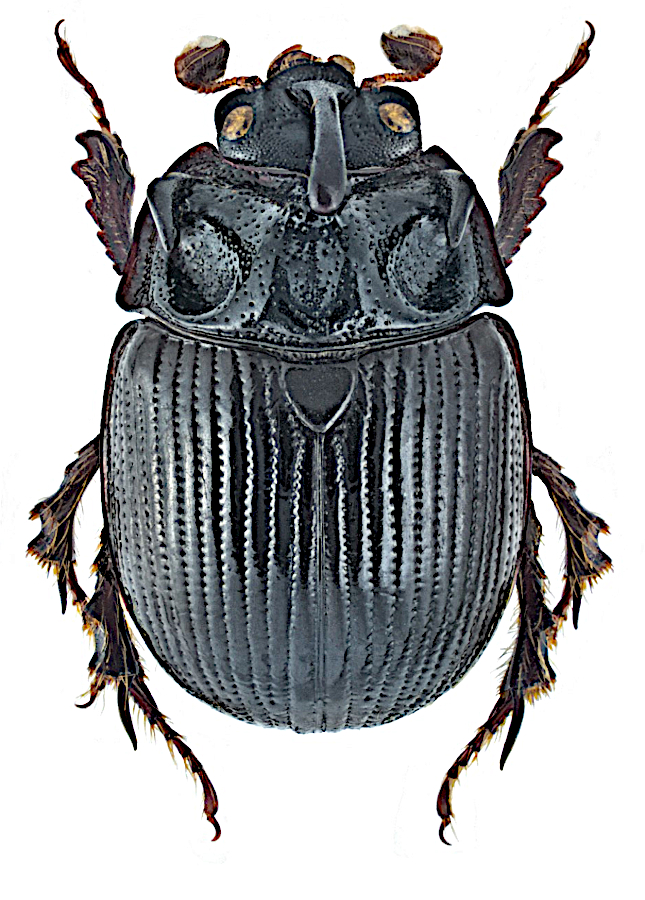
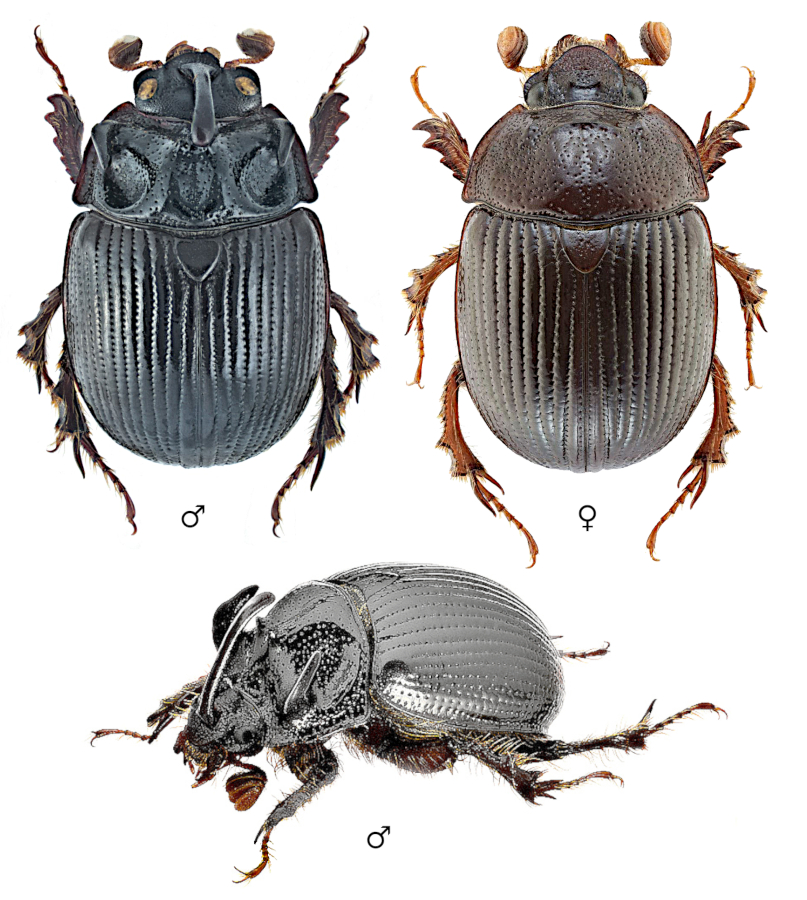
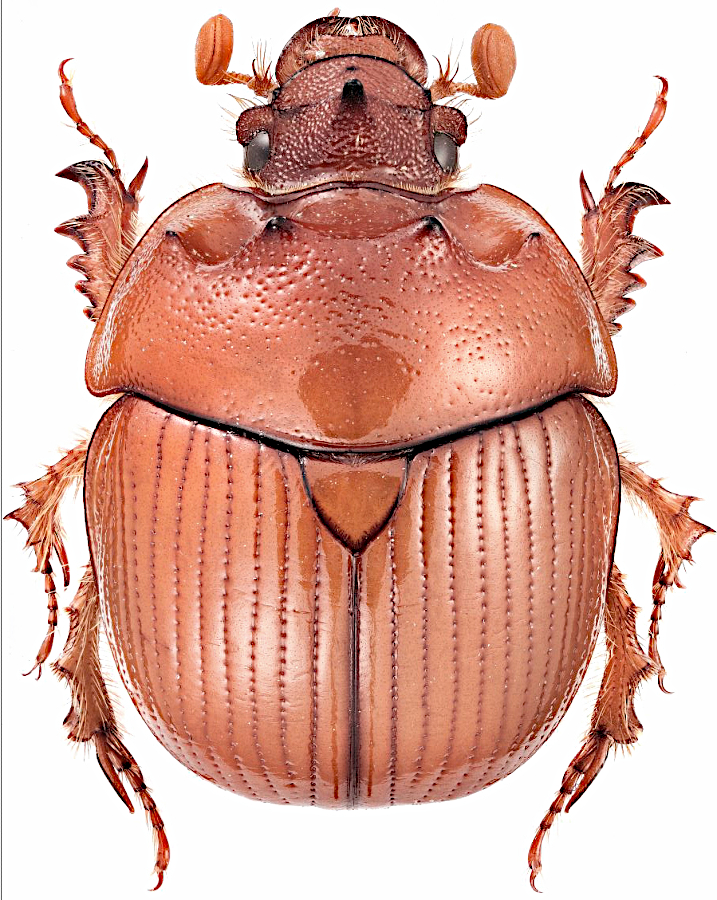
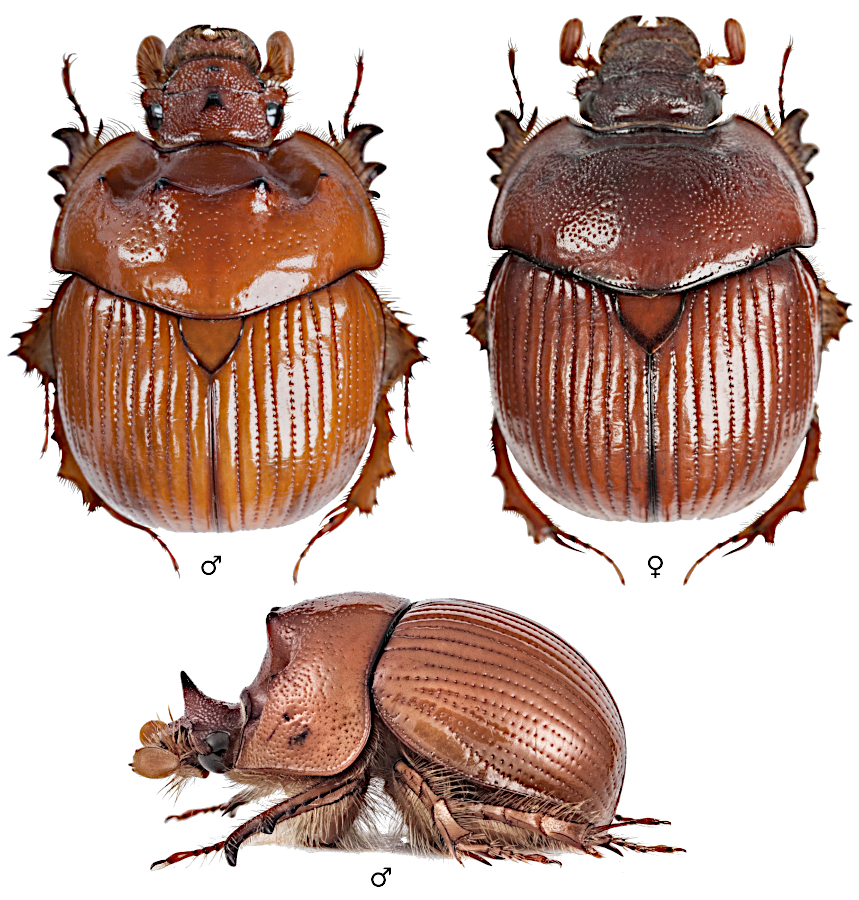
The Bolboceratidae represent a relatively small group of beetles within the superfamily Scarabaeoidea. In appearance, they resemble their relatives, the Geotrupidae, from which they differ, however, in their specific biology and morphology. They are characterised by a strongly arched, robust, almost spherical body shape and striking sexual dimorphism, with males often bearing impressive horns and protuberances on their head or pronotum, which are used in battles for females. A characteristic feature of the family is the strong front tibiae, adapted for digging, and short, club-shaped antennae with strikingly rounded lamellae. Adults are excellent flyers, active mainly at dusk and at night. Most species live hidden in the soil, where they dig tunnels and chambers, often in light, sandy or loess soils. They dig deep vertical burrows in which they store food supplies for their larvae. Both larvae and adults are predominantly mycophagous – they feed on underground fungi or, where applicable, decomposing organic matter in the soil. The family is distributed worldwide, with a significant centre of diversity lying on the southern continents, particularly in Australia.
Number of Species:
| World | 400 | |
| Palaearctic Region | 61 |
| Europe | 6 | |
| Central Europe | 2 |
 |
Family Card |
BOLBOCERATIDAE (Mulsant, 1842) |
Bolboceratinae (Mulsant, 1842) |
Bolbelasmini (Iablokoff-Khnzorian, 1977) |





Odonteini (Streubel, 1846) |