The Family Atlas |
| Processing status: | ||
| 2 / 2 | 100% | |
| Size of Species: 2 - 3.1 mm |
| Tarsal Formula: 4-4-4 |
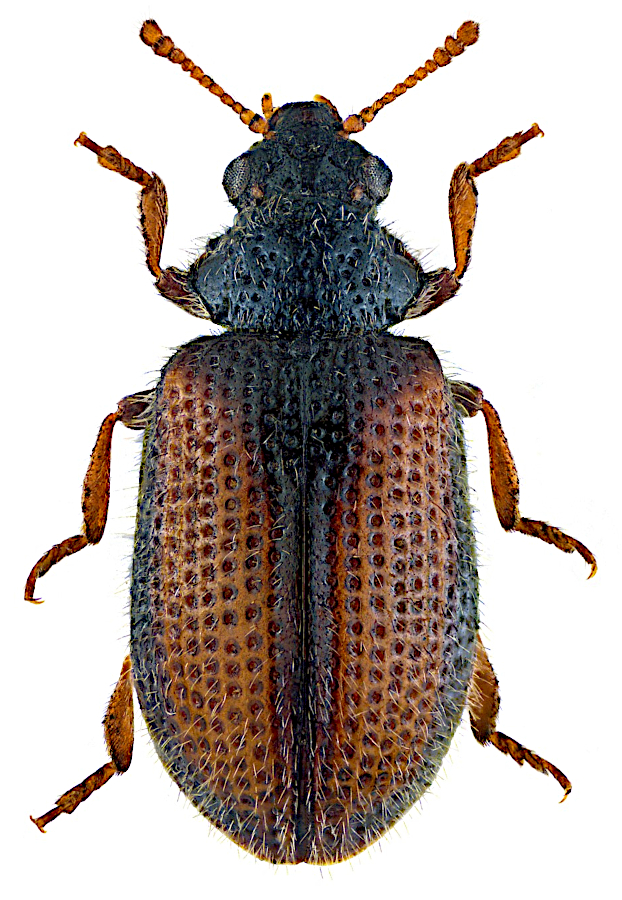
This is a closely related, isolated, small family of small beetles distributed in temperate regions of the northern and southern hemispheres. The body is slightly elongate, convex above and flattened below, hairy. The antennae are 11-articulated, ending in a 3-articulated stalk. There are two single ocelli on the head, which is unusual among beetles. The shield has serrated margins in most genera, from which the family name was derived. The genus Laricobius lacks these teeth. The elongate larvae are sclerotized above, with a series of bumps and with urogomphs on the 9th posterior article. Representatives of the family Derodontidae are divided into two main groups with different bionomics. The first group, to which the genus Derodontus belongs, are mycophagous (feeding on fungi). They are closely associated with wood borers (e.g. genera Ischnoderma and Fomitopsis) or slime molds (Myxomycetes). The beetles move on fungal fruiting bodies or in wood infested with mycelium. The second group, represented by the genus Laricobius, are predators. Both larvae and adults of this genus feed on aphids of the family Adelgidae (crustaceans), which damage conifers. Some species of the genus Laricobius are therefore used as biological control against these pests.
Number of Species:
| World | 42 | |
| Palaearctic Region | 14 |
| Europe | 3 | |
| Central Europe | 2 |
 |
Family Card |
Derodontidae (J.L. LeConte, 1861) |
Derodontinae (LeConte, 1861) |
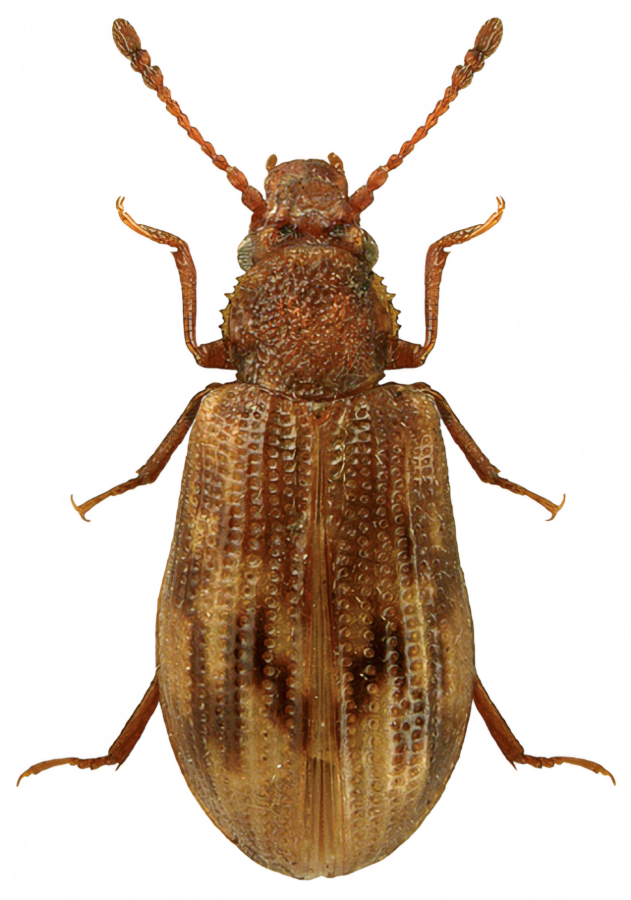






Derodontinae (LeConte, 1861) |