The Family Atlas |
| Processing Status: | ||
| 1 / 1 | 100% | |
| Size of Species: 7 - 16 mm |
| Tarsal Formula: 5-5-5 |
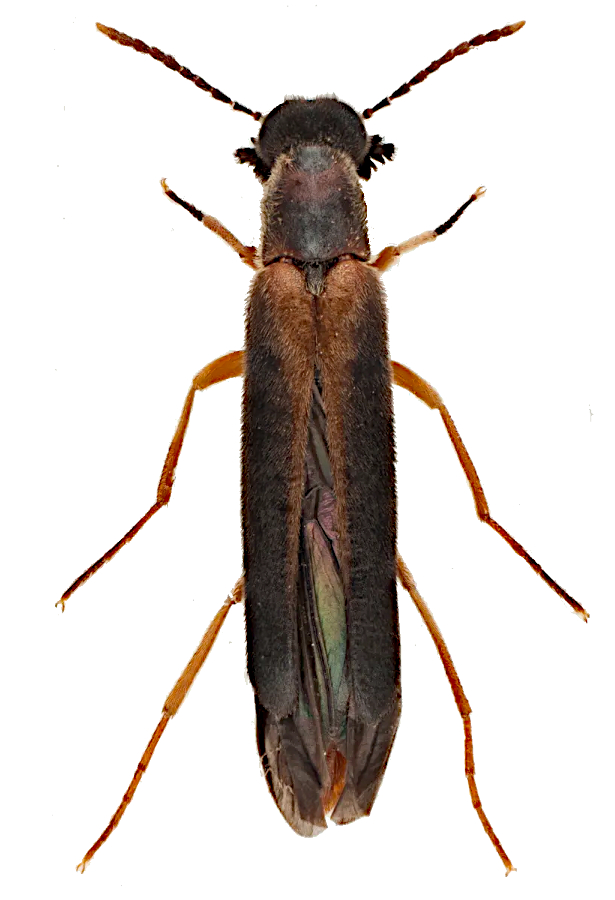
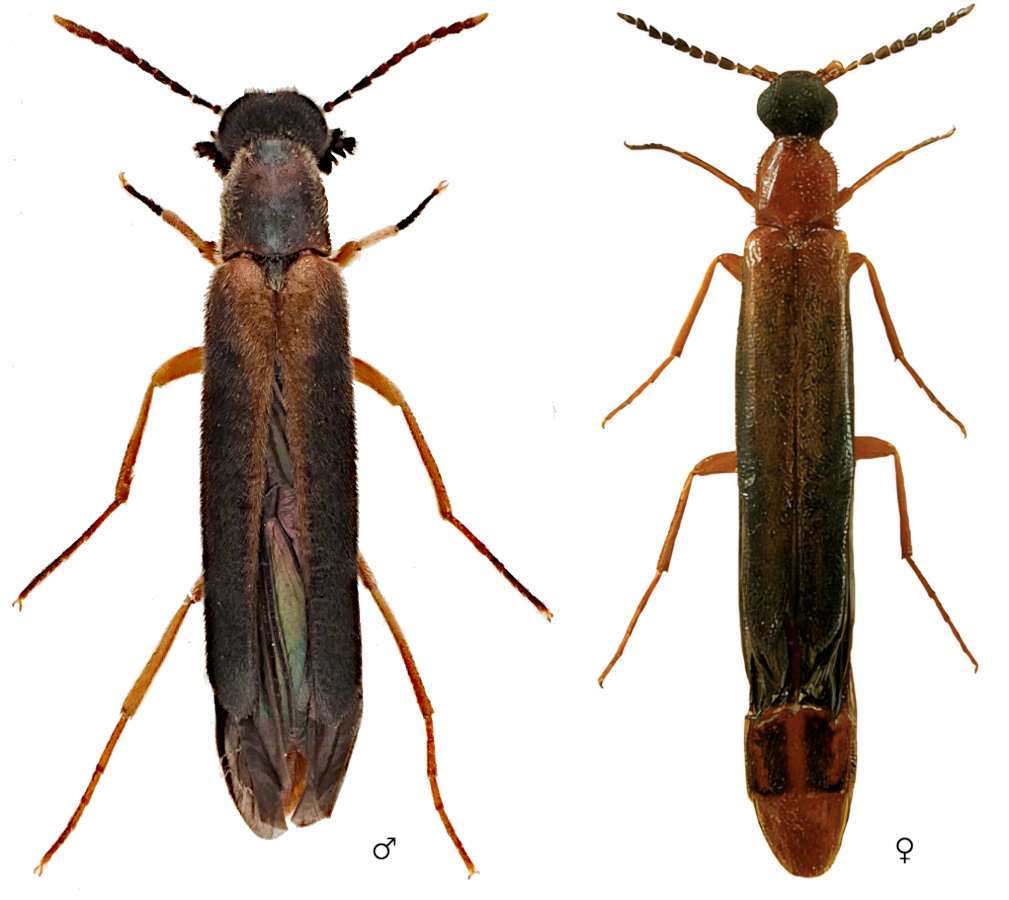
The family Lymexylidae is defined in the revised concept (Batelka et al., 2025) on the basis of phylogenomic analysis and comprises two subfamilies: Lymexylinae and Atractocerinae. It represents a group of beetles with an extremely elongated, cylindrical, soft body and thread-like or only slightly serrated eleven-segmented antennae. Their elytra are often shortened or narrowed, so that they do not completely cover the abdomen, giving them a somewhat archaic appearance. The main distinguishing feature of the males is their incredibly modified maxillary palps. These are complexly branched and form dense, shrub-like organs that serve to detect the pheromones of females in dense undergrowth. Adults are short-lived and often do not feed at all; their sole purpose is reproduction. The larvae have a symbiotic relationship with fungi of the genus Endomyces, which they cultivate in tunnels bored into the wood and on which they primarily feed. The larva has a special spiny protrusion at the end of its body, which it uses to push debris out of the tunnels, thereby keeping its fungal colony clean. The beetles prefer to develop in hard deciduous trees (e.g. oaks). The family has a cosmopolitan distribution, with the centre of diversity in the tropics, particularly in Southeast Asia, Africa and South America. The Lymexylinae are found mainly in the Palearctic region, whilst the Atractocerinae are exclusively tropical. In total, approximately 42 extant species in 11 genera are recognised within the family.
Number of Species:
| World | 42 | |
| Palaearctic Region | 14 |
| Europe | 3 | |
| Central Europe | 3 |
 |
Family Card |
LYMEXYLIDAE (Fleming, 1821) |
Lymexylinae (Fleming, 1821) |