The Family Atlas |
| Processing status: | ||
| 5 / 5 | 100% | |
| Size of Species: 2 - 4 mm |
| Tarsal Formula: 5-5-5 (Pseudotetrameria: apparently 4-4-4) |
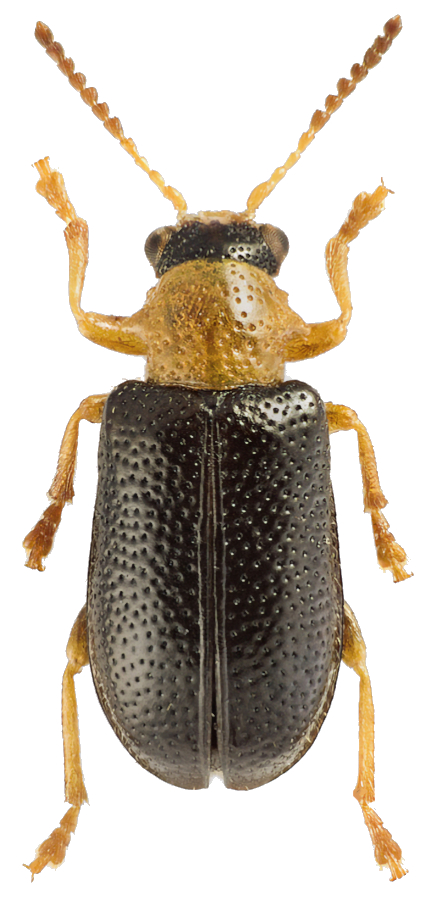
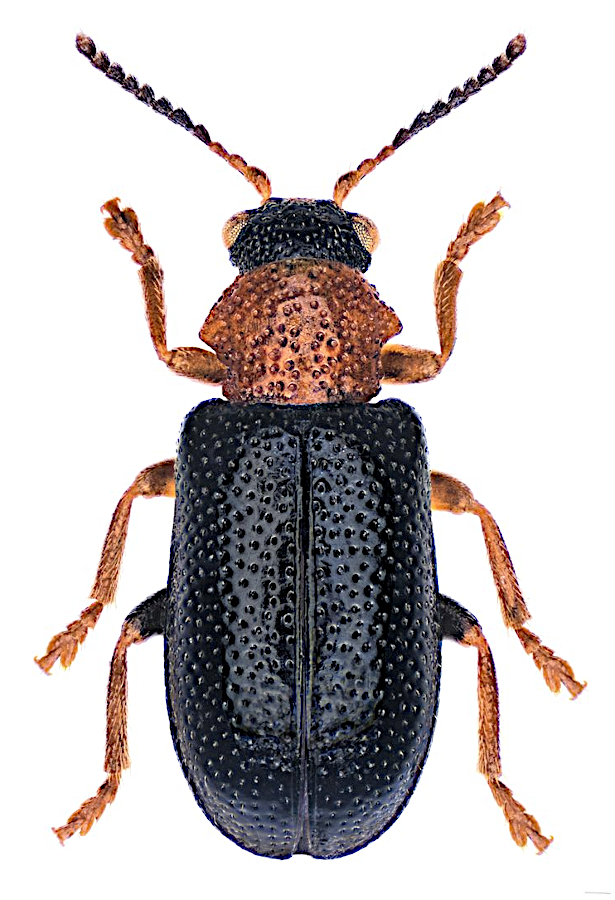
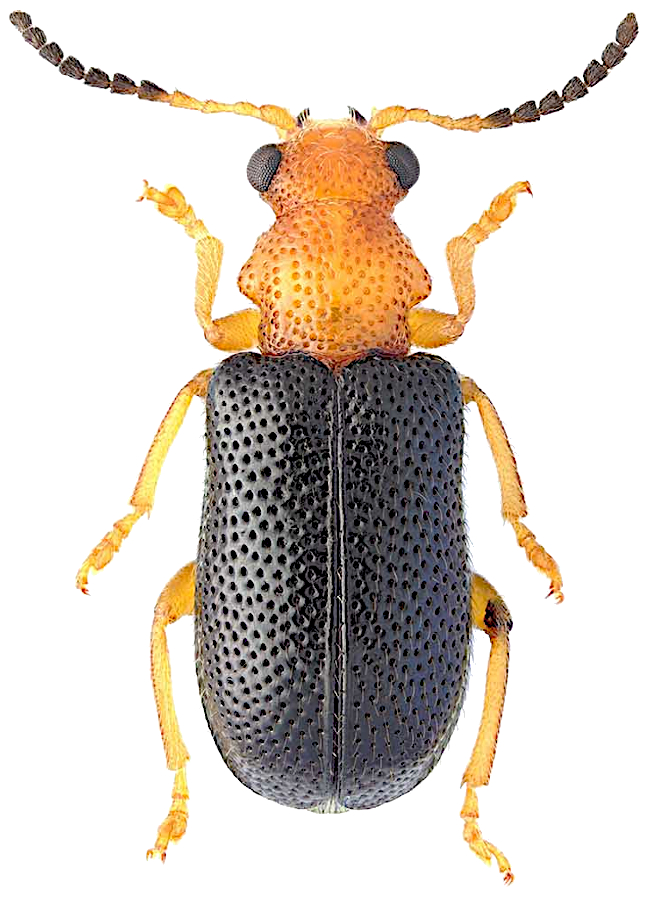
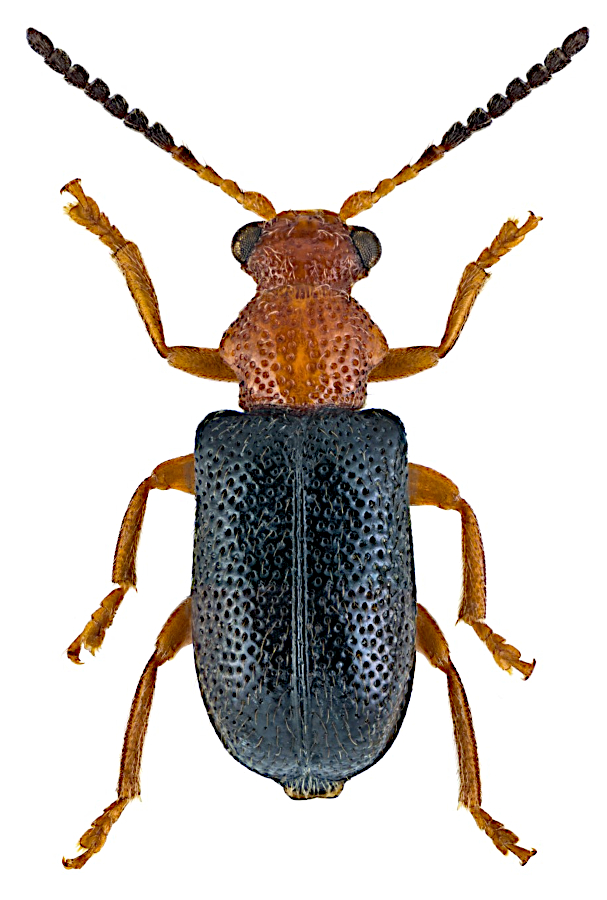
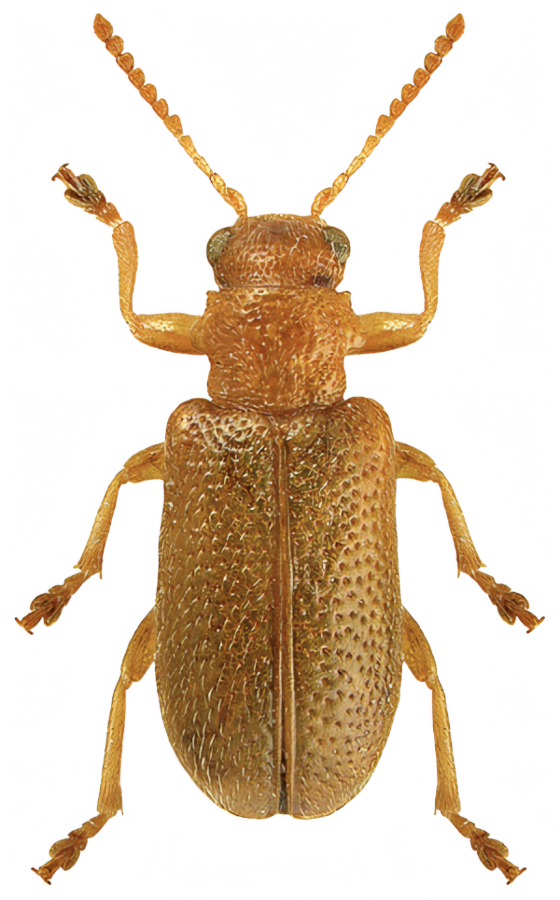
Megalopodidae is a small family of beetles in the superfamily Chrysomeloidea, which was formerly often considered a subfamily of the family Chrysomelidae. They are small to medium-sized beetles (2-20 mm worldwide, 2-4 mm in the Czech Republic), often with elongated bodies. Some tropical ones can have very elongated hind legs (subfamily Megalopodinae), which gives the whole family its name (megalos - large, podos - leg). European and Czech representatives (subfamily Zeugophorinae) are rather small and stocky. Pseudotetrameria of tarsus is characteristic (pattern 5-5-5, but apparently 4-4-4). Larvae are mostly leaf miners on various woody plants and herbs (especially in the subfamily Zeugophorinae, in the Czech Republic on aspen and alder). Some larvae develop in stems. Adults are usually phytophagous, feeding on leaves and pollen. The family has a predominantly tropical distribution, with the largest number of species in the Americas, Africa and Southeast Asia. In the temperate zone (including Europe and the Czech Republic) it is only minimally represented, and only in the subfamily Zeugophorinae (genus Zeugophora).
Number of Species:
| World | 580 | |
| Palaearctic Region | 56 |
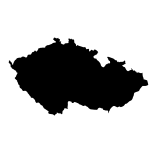
| Europe | 5 | |
| Central Europe | 5 |
 |
Family Card |
MEGALOPODIDAE Latreille, 1802 |
Zeugophorinae (Böving & Craighead, 1931) |