Geotrupes (Geotrupes) stercorarius (Linnaeus, 1758) – Chrobák velký
 Čeleď: Geotrupidae
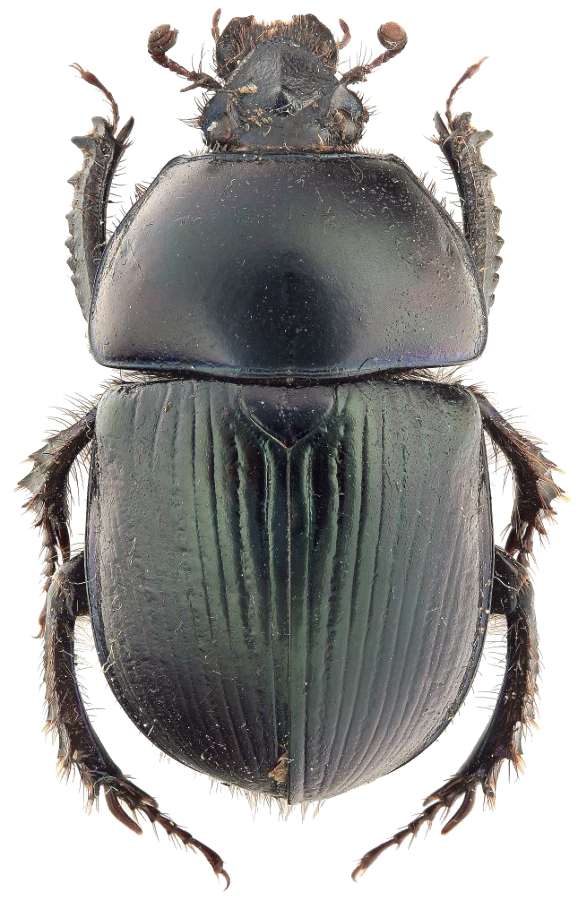
Jde o našeho největšího chrobáka. Délka těla se pohybuje obvykle mezi 15–25 mm. Tělo robustní, kompaktní a silně vyklenuté, s hlavou vysunutou vpřed. Základní zbarvení je černé. Může mít slabý namodralý kovový lesk na svrchní straně, přičemž spodek těla mívá silnější modrý kovový lesk (někdy popisovaný i jako zlatozelený, modrý, fialový až červený kovový nádech). Krovky jsou slabě rýhované. U tohoto druhu se mezi ramenní boulí a švem krovek nachází sedm krovkových rýh, což je rozlišovací znak od podobných druhů. Štít je hladký nebo jen slabě zdrsněný. Má silné, robustní a ochlupené nohy, které jsou přizpůsobené k hrabání. Tykadla jsou krátká, zakončená charakteristickou štětinkou (lamelovitou paličkou).
Dospělí brouci jsou aktivní od jara do podzimu, konkrétně od dubna až do září, s vrcholem aktivity v letních měsících. Druh preferuje pastviny, okraje lesů, parky, světlé lesní lemy a otevřenou krajinu s dostatkem trusu býložravců; vyskytuje se i v zahradách a na kompostech. Důležité je přítomnost trusu velkých savců nebo rozkládajícího se organického materiálu, který slouží k potravě a rozmnožování. Je rozšířen v celé Evropě, Malé Asii a pokračuje na východ přes celou Asii až do Japonska. Najdeme ho od nížin až po horské oblasti (cca do 2 300 metrů n. m.). Patří mezi koprofágní (živící se výkaly) a saprofágní (živící se tlejícími zbytky) brouky. Preferují zejména koňský a hovězí trus, ale nepohrdnou ani výkaly jiných kopytníků a savců. Mohou se živit i tlejícím rostlinným materiálem, shnilými houbami nebo tlejícím listím či jehličím.
Chrobáci velcí jsou známí svou příkladnou péčí o potomstvo. Po spáření hloubí párek chrobáků pod kupkou trusu podzemní hnízdo (noru). Hlavní chodba může být hluboká až 50–60 cm. Z ní vybíhají boční chodby (štoly) dlouhé přibližně 10–20 cm, které jsou zakončeny mateřskou komůrkou. V hnízdě bývá zpravidla 4–8 (někdy až 20) takovýchto postranních chodeb. Brouci napěchují boční chodby trusem, který slouží jako potrava pro larvu. Samice naklade jedno vajíčko na konec každé trusem naplněné boční chodby a následně vchod ucpe (často rovněž trusem), aby zajistila larvě dostatek potravy a ochranu. Vývoj larvy a kukly probíhá uvnitř chodby. Celý vývoj do dospělého brouka trvá obvykle jeden rok, ale za méně příznivých podmínek se může protáhnout na dva až tři roky. Dospělí brouci se líhnou na podzim, ale svou podzemní komůrku opouštějí (přezimují) až na jaře následujícího roku.
Zdroj obrázků: Boža, Sedláček